Overview
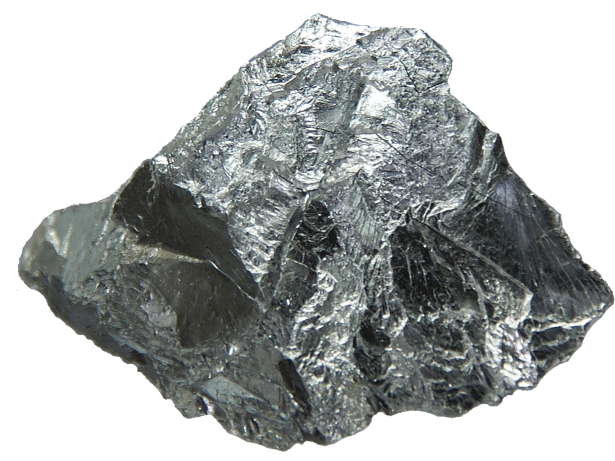
Tungsten (chemical symbol W), also known as wolfram, is a hard, rare metal. Its major ores include wolframite and scheelite. The free element is remarkable for its robustness and has the highest melting point of all the elements. Its high density is 19.3 g/cm³, comparable to uranium and gold.
China is by far the largest producer of tungsten ores and concentrates, with more than 80% of the global production in 2024, as well as the majore producer of refined tungsten, with more than 85% of the global production. In February 2025, China imposed export restrictions since 2025 on tungsten compounds and intermediates, such as APT (paratungstate d'ammonium), tungsten metal powders, carbites, etc, resulting in a sharp increase of prices. For instance, the price of APT have been multiplied by five between april 2025 and april 2026 on the European market (Argus).
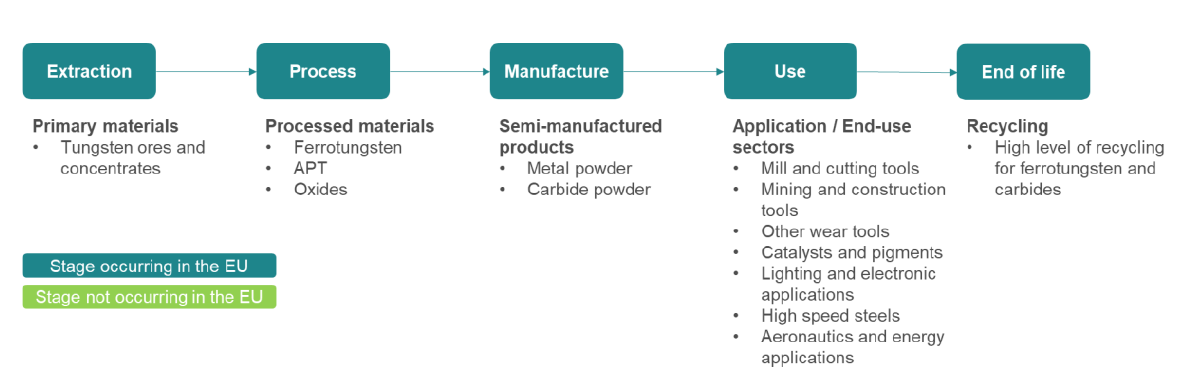
In the European Union, tungsten ore is extracted in Spain, Portugal, and Austria especially [World Mining Data,2024]. Tungsten ores and concentrates as well as tungsten waste are also processed into tungsten-based products in a wider range of countries. Secondary production in Europe is indeed relatively high, with an estimated recycling rate of 40% [Graedel et al.,2011].
| Global production | Global producers | EU consumption | EU share | EU suppliers | Import reliance |
|---|---|---|---|---|---|
| 81,306t | China 81% Vietnam 7% Russia 2% | 0t | 0% | Austria 40% Spain 24% Portugal 22% United Kingdom 11% | 0% |
| Global production | Global producers | EU consumption | EU share | EU suppliers | Import reliance |
|---|---|---|---|---|---|
| 86,200t | China 86% United States 4% Russia 3% Vietnam 3% Japan 2% | 4,385t | 5% | China 34% United States 16% Austria 8% Russia 8% Vietnam 7% United Kingdom 7% India 4% Korea, South 3% Turkey 2% | 73% |
Average tungsten prices have appreciated consistently since early 2000 till 2011. In the first half of the decade starting from 2010 prices increased up to 358 USD/kg, then experienced a fall reaching lowest value by 2016, upt to 142 USD/kg. The fall in value around 2015 – 16 was due to economic turmoil in China. Afterwards, prices recovered temporarily until 2024.
In 2025, China imposed export restrictions on tungsten compounds and intermediates, such as APT (paratungstate d'ammonium), tungsten metal powders, carbites, etc, resulting in a sharp increase of prices. For instance, the price of APT have been multiplied by five between april 2025 and april 2026 (Argus).
China is by far the largest producer of tungsten ores and concentrates, with more than 80% of the global production in 2024 [U.S. Geological Survey,2025]. Its production has been regulated by government-imposed extraction quotas since 2015. In 2024, these quotas were set at 114,000 tonnes, compared to 111,000 tonnes in 2023 (expressed in concentrates containing 65% WO3) for primary extraction [MNR-PRC,2024].
Vietnam went from 2014 from a medium-scale to the world's second largest producer of tungsten concentrates outside China, accounting to 7.3% of the global production, followed by Russia, Rwanda and Bolivia. In Europe, several countries - Austria, Spain, Portugal - produce tungsten ores and concentrates, representing more than 85% of EU supply in ores and concentrates. Recently, the United Kingdom has also been developing its capacities to produce tungsten concentrates.
China is also the largest producer of refined tungsten worldwide with 86.4% of the production of tungsten intermediates, including tungsten oxides, tungstates, tungsten powder, tungsten carbide, and ferrotungsten. The United States, Russia and Vietnam are other significant producers, however accounting to 4.4%, 2.8%, 2.8% of the production, respectively.
However, China remains the main supplier of the European Union, accounting to 34.2% of its supply, followed by the United States (16.3%), Austria (7.9%), Russia (7.7%), Vietnam (7.2%), the United Kingdom (6.5%).
According to various studies from ITIA (International Tungsten Industry Association), the share of secondary tungsten in intermediate products (APT, oxides, carbides etc.) is estimated to be near 35% [Zeiler et al.,2021]. Secondary tungsten could be separated in two main categories: new scrap (production scrap) and old scrap (end-of-life scrap).
Two major processes are used to recover tungsten waste: the mecanical / metallurgical route (zinc process) and the chemical route [Leal-Ayala et al.,2015]. The zinc process is a relevant route for recycling pure cemented carbides, allowing separation of tungsten carbides (WC) and its metallic matrix. As a result, most tungsten is recycled through this route, given that two-thirds of tungsten is used underthe form of carbites. The recycling rate of tungsten carbite in Europe is estimated to be around 50%.
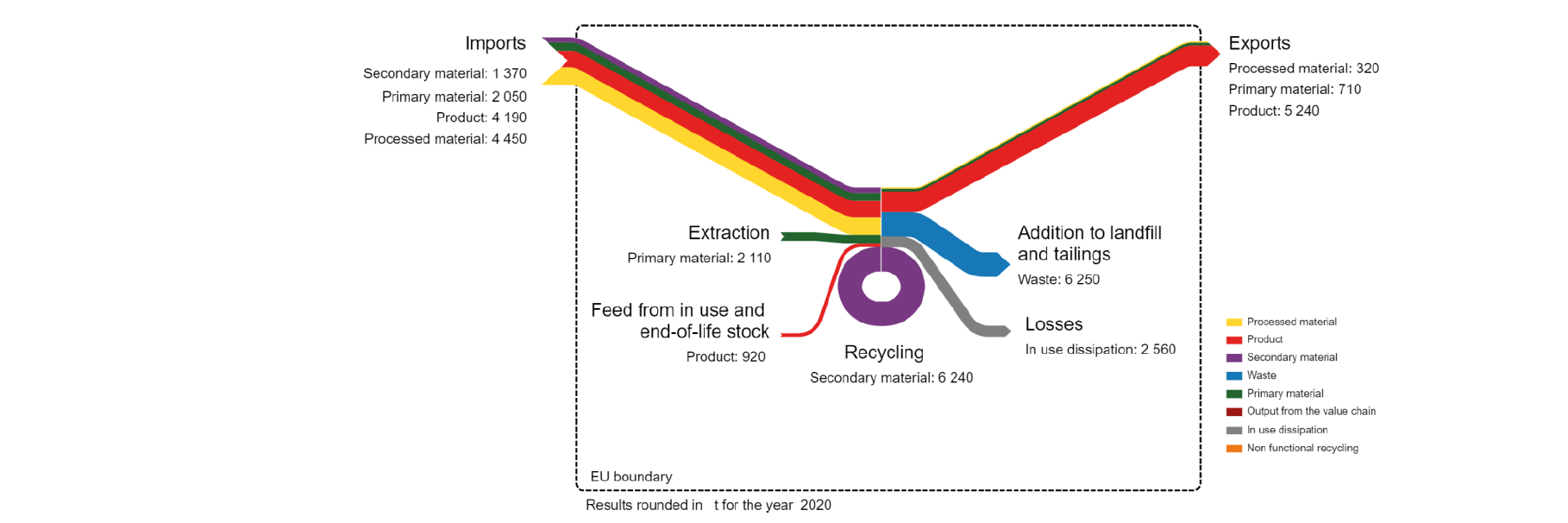
The recycling activities inside EU have considerably increased since the global economic crisis in 2009. Based on the material flow analysis performed in the MSA study, a 42% EoL-RIR has been estimated, mainly from cemented carbide scrap [Ladenberger et al.,2018]. This is consistent with the estimation that nearly half of the tungsten contained in the total EU production of semi-finished products in Europe is recycled [Graedel et al.,2011] [BIO Intelligence Service,2015].
Due to its exceptional physical properties, tungsten is used for a wide range of applications. In terms of end-use industrial sectors, according to the International Tungsten Industry Association (ITIA), 26% of the tungsten produced globally is used for the transport industry, 26% for the mining and construction represents, 18% for industrial uses, 10% for chemical and petrochemical uses. They are followed by consumer durables (8%), defence (6%) and energy (6%).
Accross these end-use sectors, cemented carbides is widely used, thanks to its high wear resistance even at high temperatures, which makes it a valuable candidate for cutting and drilling tools. It represents 64% of tungsten global demand in 2025 [S&P Global,2026]. In the EU, mill and cutting tools represent 29% of the uses, while mining and construction tools and wear tools, also requiring tungsten cemented carbite, amount to 23%, and 12%, respectively.
Similar required materials properties, in terms of resistance to temperature, arise from the addition of tungsten to steel and alloys. High speed steels applications include various tools performing high toughness and high strenght, although the cutting speed is proved to be faster for tools made in cemented carbite. High speed steel & alloys is estimated to account for 13% of tungsten global demand [S&P Global,2026]. These applications represent 13% of the EU uses.
Aeronautics and energy applications (11% of the EU uses), although they also require cutting tools, include more specifically alloys based on steel or aluminium, heavy alloys, coatings or bars & rods. Based on its thermal, mechanical or radiation resistance properties, among others, tungsten is a relevant candidate for aircraft engine or rocket nuzzles. Energy applications include materials based on tungsten carbites or HSS for high-temperature technology (e.g. furnaces, power stations), chemicals, electrodes for TIG welding or wires.
Tungsten is finally used by the petrochemical industry under the form of chemicals, for example in hydrocracking catalysts involved in diesel fuel production. Additionally, tungsten-containing ceramics are employed as catalysts for the denitrification and desulfurization (DeNOx and DeSOx) of exhaust combustion gases. Tungsten is also used for the production of various pigments, mainly based on tungsten oxides, which allow the creation of a range of colors from yellow to blue [Weil & Schubert,2013]. Finally, various tungsten chemicals can be used for electronics and electrical applications. These uses account to 11% of the EU uses.
Tungsten is to a smaller extend used in lighting technology (filaments) as well as electronic applications, whether as chemicals for electronic circuits (WF6 for instance) or as halogen lamps.
| Use | Percentage | Substitute | Sub share | Cost | Performance |
|---|---|---|---|---|---|
| Mill and cutting tools | 29% | No substitute | 68% | No substitute | |
| Mill and cutting tools | 29% | Molybdenum in molybdenum carbide | 15% | Similar or lower costs | Reduced |
| Mill and cutting tools | 29% | Silicon in ceramic-metallic composites (cermets) | 10% | Similar or lower costs | Reduced |
| Mill and cutting tools | 29% | Cubic Boron-nitrate | 1% | Similar or lower costs | Reduced |
| Mill and cutting tools | 29% | Diamond | 1% | Very high costs (more than 2 times) | Similar |
| Mill and cutting tools | 29% | Aluminium in ceramics | 1% | Similar or lower costs | Reduced |
| Mill and cutting tools | 29% | Tantalum | 1% | Very high costs (more than 2 times) | Reduced |
| Mill and cutting tools | 29% | Zirconium in ceramics | 1% | Similar or lower costs | Reduced |
| Mill and cutting tools | 29% | Rhenium | 1% | Very high costs (more than 2 times) | Reduced |
| Mill and cutting tools | 29% | Gold | 1% | Very high costs (more than 2 times) | Similar |
| Mining and construction tools | 23% | No substitute | 78% | No substitute | |
| Mining and construction tools | 23% | Silicon in ceramic-metallic composites (cermets) | 10% | Similar or lower costs | Reduced |
| Mining and construction tools | 23% | Molybdenum in molybdenum carbide | 5% | Similar or lower costs | Reduced |
| Mining and construction tools | 23% | Gold | 1% | Very high costs (more than 2 times) | Similar |
| Mining and construction tools | 23% | Cubic Boron-nitrate | 1% | Similar or lower costs | Reduced |
| Mining and construction tools | 23% | Diamond | 1% | Very high costs (more than 2 times) | Similar |
| Mining and construction tools | 23% | Aluminium in ceramics | 1% | Similar or lower costs | Reduced |
| Mining and construction tools | 23% | Tantalum | 1% | Very high costs (more than 2 times) | Reduced |
| Mining and construction tools | 23% | Zirconium in ceramics | 1% | Similar or lower costs | Reduced |
| Mining and construction tools | 23% | Rhenium | 1% | Very high costs (more than 2 times) | Reduced |
| High speed steels applications | 13% | No substitute | 68% | No Substitute | No substitute |
| High speed steels applications | 13% | Molybdenum in molybdenum carbide | 15% | Similar or lower costs | Reduced |
| High speed steels applications | 13% | Silicon in ceramic-metallic composites (cermets) | 10% | Similar or lower costs | Reduced |
| High speed steels applications | 13% | Diamond | 1% | Very high costs (more than 2 times) | Similar |
| High speed steels applications | 13% | Cubic Boron-nitrate | 1% | Similar or lower costs | Reduced |
| High speed steels applications | 13% | Zirconium in ceramics | 1% | Similar or lower costs | Reduced |
| High speed steels applications | 13% | Aluminium in ceramics | 1% | Similar or lower costs | Reduced |
| High speed steels applications | 13% | Tantalum | 1% | Very high costs (more than 2 times) | Reduced |
| High speed steels applications | 13% | Rhenium | 1% | Very high costs (more than 2 times) | Reduced |
| High speed steels applications | 13% | Gold | 1% | Very high costs (more than 2 times) | Similar |
| Other wear tools | 12% | No substitute | 68% | No substitute | |
| Other wear tools | 12% | Molybdenum in molybdenum carbide | 15% | Similar or lower costs | Reduced |
| Other wear tools | 12% | Silicon in ceramic-metallic composites (cermets) | 10% | Similar or lower costs | Reduced |
| Other wear tools | 12% | Rhenium | 1% | Very high costs (more than 2 times) | Reduced |
| Other wear tools | 12% | Gold | 1% | Very high costs (more than 2 times) | Similar |
| Other wear tools | 12% | Cubic Boron-nitrate | 1% | Similar or lower costs | Reduced |
| Other wear tools | 12% | Diamond | 1% | Very high costs (more than 2 times) | Similar |
| Other wear tools | 12% | Aluminium in ceramics | 1% | Similar or lower costs | Reduced |
| Other wear tools | 12% | Tantalum | 1% | Very high costs (more than 2 times) | Reduced |
| Other wear tools | 12% | Zirconium in ceramics | 1% | Similar or lower costs | Reduced |
| Aeronautics and energy uses | 11% | Lead | 50% | Similar or lower costs | Reduced |
| Aeronautics and energy uses | 11% | No substitute | 50% | No Substitute | No substitute |
Several materials can be be considered as substitutes to tungsten in several applications. However, appart from a few exceptions, the performances of the applications are reduced and the manufacturing or the operational costs may increase in a substantial number of cases.
With the exception of the automotive sector, for which the demand is estimated to decrease by 2030 due to the development of electric vehicles which require less moving parts, most industries are expected to required an increasing volume of tungsten (ITIA). Following Russia's invasion of Ukraine, the global trend toward rearmament has increased, which is likely to further drive the demand for tungsten in military applications [Reuters,2025]. Overall, tungsten demand is expected to grow by 10% between 2026 and 2030 [S&P Global,2026] or by 30% according to other industrial sources. China will remains the highest consumer country for first-use and end-use applications.
Regarding supply, estimated geological reserves are estimated at about 4.6 million tonnes of tungsten [USGS,2025]. Several projects are currently underway to (re)open or start new tungsten deposits extraction. This includes the recently opened Sangdong mine in South Korea and the Bakuta mine in Kazakhstan. In Australia, the Mount Carbine mine is being expanded to include underground operations, with a potential reopening of the nearby Wolfram Camp mine, which is owned by the same company. This trend can also be observed in Canada, in the Yukon, where new studies are underway on the Mactung project.
In Europe, some projects are currently underway in Spain and Portugal, as well as the United Kingdom.
Market analysis, trade and prices
| Global production | Global producers | EU consumption | EU share | EU suppliers | Import reliance |
|---|---|---|---|---|---|
| 81,306t | China 81% Vietnam 7% Russia 2% | 0t | 0% | Austria 40% Spain 24% Portugal 22% United Kingdom 11% | 0% |
| Global production | Global producers | EU consumption | EU share | EU suppliers | Import reliance |
|---|---|---|---|---|---|
| 86,200t | China 86% United States 4% Russia 3% Vietnam 3% Japan 2% | 4,385t | 5% | China 34% United States 16% Austria 8% Russia 8% Vietnam 7% United Kingdom 7% India 4% Korea, South 3% Turkey 2% | 73% |
According to the Table 4, European tungsten ore exports exceed imports, resulting in a negative import reliance. However, this likely indicates that the vast majority of mining production is exported outside of Europe for processing, and then re-imported in the form of intermediate and/or finished products. This explains the high import reliance shown in Table 5.
China is the biggest producer, exporter, and consumer of tungsten concentrates. Tungsten has been one of the metals subject to extraction quota controls since 2002, alongside rare earths and antimony. Production reportedly fell by nearly 30% between 2023 and 2024 (ADM, 2026). China is also the major exporter of tungsten intermediates such as tungsten oxides, tungstates, tungsten powder, tungsten carbide, and ferrotungsten.
In 2025, China imposed export restrictions on tungsten compounds and intermediates, such as APT (paratungstate d'ammonium), tungsten metal powders, carbites, etc. According to Argus [ArgusMedia,2024], China’s production of ore and concentrate was not sufficient to meet its internal demand, leading to a growing reliance on tungsten scrap. However, the availability of scrap itself has proven insufficient to supply the entire Chinese tungsten industry, resulting in increased dependence on imported ores and concentrates. This trend is expected to continue, as only a few mines are likely to (re)open in the near future.
| Mining | Processing/refining | ||
|---|---|---|---|
| CN Code | Title | CN Code | Title |
| 26110000 | Tungsten ores and concentrates | 28259040 | Tungsten oxides and hydroxides |
| 28418000 | Tungstates 'wolframates' | ||
| 28499030 | Carbides of tungsten, whether or not chemically defined | ||
| 72028000 | Ferro-tungsten and ferro-silico-tungsten | ||
| 81011000 | Tungsten powders | ||
| 81019400 | Unwrought tungsten, incl. bars and rods of tungsten obtained simply by sintering | ||
| 81019600 | Tungsten wire | ||
| 81019700 | Tungsten waste and scrap (excl. ash and residues containing tungsten) | ||
| 81019910 | Tungsten bars and rods (other than those obtained simply by sintering), profiles, plates, sheets, strip and foil, n.e.s. | ||
| 853921 | Lamps; filament, (excluding ultra-violet or infra-red), tungsten halogen | ||
For apparent European consumption estimation, the eleven CN codes above-mentioned are taken into account. The tungsten content share is estimated to vary according to the categories, ranging from about 55% for the concentrates to about 99% for pure powders or wires.
Figures 5 and 6 illustrates that, after years of being a net importer of tungsten powders, the European Union has significantly reduced its consumption and/or increase its production. Until 2008, the EU imported over 1,000 tonnes of tungsten powders annually, with higher imports in 2001 (about 2,700 tonnes), 2004 (about 1,900 tonnes) and 2008 (about 1,700 tonnes) and exported less than 500 tonnes since 2005. From 2008, imports declined sharply. The import/export ratio then stabilised around 2016 and remains stable today, with flows fluctuating between 200 and 300 tonnes per year.
The figures also show the significant supply from Canada, since 2000.
These figures should nevertheless be interpreted with caution, as according to SCRREEN2, import data reported by certain countries may be inaccurate. This is due to the fact that some companies choose not to disclose their import for confidentiality reasons.
Figure 7 and 8 illustrate the high reliance of the EU on imports of tungsten wire, especially from two major countries between 2014 and 2020 (China and The United Kingdom), then predominantly from China from 2021.
The volume of tungsten wire imports by the EU fell sharply after 2020 (after a peak at 290 t), then stabilised at around 100 tonnes per year. Exports volume are relatively low compared to imports with an annual average close to 20 tonnes. It may indicate that the European Union has reduced its consumption and/or increased its production
As indicated in figure 10, China is by far the largest supplier of the European Union. Following a long period of almost uninterrupted growth between 2002 and 2014, imports of tungsten lamps and filaments into the European Union have fallen sharply, from a record high of around 18,000 tonnes imported in 2014 to less than 5,000 tonnes in 2019 and beyond. This evolution is likely due to a steep decline in the use of incandescent, fluorescent and high-intensity discharge lamps, which are gradually being replaced by more energy-efficient LED technologies. Imports have stabilised since 2019 under about 5,000 tonnes, likely due to certain specific uses such as X-ray lamps and film projection technologies.
Figures 11 and 12 show the reliance of the EU on imports for tungsten oxides and hydroxides. The United States, Vietnam and China have been the main suppliers of the EU and Post COVID, the United States and Vietnam have emerged as top suppliers compared to China.
Figures 13 and 14 show that wolframates, including APT, are imported primarily from China and Vietnam. Imports have experienced a fall since 2016 and have stabilised since 2020.
Ferro-tungsten and ferro-silico-tungsten is mainly imported from China. Vietnam has been a significant supplier of the EU from 2009 to 2018, then from 2023. The imports have been declining since 2017.
Figure 15 illustrates relatively modest export volumes, stable since 2000 except in 2015, and averaging 100-200 tonnes annually.
Figure 17 and 18 show that import and export flows were unstable between 2000 and 2011. Imports remained afterwards stable since 2017. Exports remained low anf flat since 2011, averaging 10 tonnes annually, with an unexpected peak in 2020.
Since 2015, China especially, as well as the United Kingdom, have become the two main partners to supply the EU with unwrought tungsten. The United States was an important partner between 2002 and 2015.
As shown in Figure 19, the imports and exports of tungsten waste and scrap have exhibited a near continuous upwarding trend over the past two decades. It may be explained by a high trading activity. The European Union’s suppliers are highly diversified, including the United States and the United Kingdom especially, as well as India, Turkey, and South Korea. China’s relatively modest position as a EU supplier is likely due to the demand of the chinese domestic industry to process its own waste and scrap, with the objective to export higher value-added products.
Figure 21 and 22 show that tungsten bars and rods are almost entirely imported from China, with import volumes rising almost continuously since 2011. In contrast, export volumes, which are relatively low, have fallen steadily since 2016, now averaging 20 tonnes annually. The EU was however a net exported between 2007 and 2009.
Figure 23 and 24 show that tungsten carbides imports and exports have remained relatively stable over the past five years, following unstable flows, ranging from 819 to 2,300 tonnes of imports between 2000 and 2019, nevertheless correlated with the tendency of the exports flows. China, South Korea and Israël are the EU's main suppliers, while the share of the United States has been decreasing.
Exports and imports of tungsten ores and concentrates have been relatively stable since 2013, with an average of 2,000 tonnes for the former and 100 to 200 tonnes for the latter. A major peak of imports occured in 2012. It may be linked to an error in customs declarations.
The EU is a next exporter or ores and concentrates, meaning that it exports its production to be processed outside Europe.
Average tungsten prices have appreciated consistently since early 2000 till 2011. In the first half of the decade starting from 2010 prices increased up to 358 USD/kg, then experienced a fall reaching lowest value by 2016, upt to 142 USD/kg. The fall in value around 2015 – 16 was due to economic turmoil in China. Afterwards, prices recovered temporarily until 2024.
In 2025, China imposed export restrictions on tungsten compounds and intermediates, such as APT (paratungstate d'ammonium), tungsten metal powders, carbites, etc, resulting in a sharp increase of prices. For instance, the price of APT have been multiplied by five between april 2025 and april 2026 (Argus).
With the exception of the automotive sector, for which the demand is estimated to decrease by 2030 due to the development of electric vehicles which require less moving parts, most industries are expected to required an increasing volume of tungsten (ITIA). Following Russia's invasion of Ukraine, the global trend toward rearmament has increased, which is likely to further drive demand for tungsten in military applications [Reuters,2025]. Overall, tungsten demand is expected to grow by 10% between 2026 and 2030 [S&P Global,2026] or by 30% according to other industrial sources. China will remains the highest consumer country for first-use and end-use applications.
Regarding supply, estimated geological reserves are estimated at about 4.6 million tonnes of tungsten [USGS,2025]. Several projects are currently underway to (re)open or start new tungsten deposits extraction. This includes the recently opened Sangdong mine in South Korea and the Bakuta mine in Kazakhstan. In Australia, the Mount Carbine mine is being expanded to include underground operations, with a potential reopening of the nearby Wolfram Camp mine, which is owned by the same company. This trend can also be observed in Canada, in the Yukon, where new studies are underway on the Mactung project.
In Europe, some projects are currently underway in Spain and Portugal, as well as the United Kingdom.
Demand
The demand for the energy sector is expected to increase sharply by 2030, and more or less doubled, especially due to the development of the photovoltaic sector which requires silicon-ingots cutting. The defence sector is also a major growing sector, altough itsglobal consumption is expected to remain between 10-15% of the uses. By 2032, the mining sector is expected to remain the main consumer of tungsten with about 17% of the total tungsten consumption, followed by defence. Industrial use, energy, and construction are estimated to represent respectively about 10% of the global demand, according to industrial sources.
It is estimated that EU’s demand represents about 20% of the world production according to ITIA, and is the second market after China (that consumes half of the tungsten available worldwide), according to ITIA.
Although the production of ores and concentrates has been stable since 2000, with a volume more or less equivalent to 2,000 tonnes, EU started to export more than it imported since 2008-2009. EU consumption decreased from about 4,000 tonnes to less than 2,000 tonnes in 2009, before dropping to zero and even negative values since. The european average annual demand for tungsten concentrates has been ranged between -470 tonnes to -71 tonnes per year since 2020. It may be explained by the fact than the european production is higher than the processing capacities to refine the materials locally.
EU annual demand of tungsten intermediates was higher than 10,000 tonnes until 2016, based on significant imports. Since 2015, the production in Europe has been slightly increasing and the demand droped significantly. In 2020, the imports were equivalent to the exports. Afterwards, the EU demand fluctuated from 1,300 to 4,500 tonnes approximately, possibly because the EU relies increasingly more on the imports of semi-finished products.
Import reliance is 0% at the extraction stage, but equivalent to 73% at the processing stage. It is explained but a low production, equivalent to 0 in 2024, requiring high imports to meet the industrial needs.
The EU import reliance on tungsten processed into the mentioned tungsten intermediates likely indicate that the majority of mining production is exported outside of Europe for processing, and then re-imported in the form of intermediate and/or finished products.
Due to its exceptional physical properties, tungsten is used for a wide range of applications. In terms of end-use industrial sectors, according to the International Tungsten Industry Association (ITIA), 26% of the tungsten produced globally is used for the transport industry, 26% for the mining and construction represents, 18% for industrial uses, 10% for chemical and petrochemical uses. They are followed by consumer durables (8%), defence (6%) and energy (6%).
The global and european uses of tungsten are defined in the section through the first-use application. Mill and cutting tools represent the largest share of first-use (29%), while mining and construction tools account to 23%, high-speed steels application to 13%, other wear tools to 12%, aeronautics and energy uses to 11%, catalysts and pigments to 11%.
Accross these first and end-use sectors, cemented carbides is widely used, thanks to its high wear resistance even at high temperatures, which makes it a valuable candidate for cutting and drilling tools especially. It represents 64% of tungsten global demand in 2025. Similar properties arise from the addition of tungsten to steel and alloys, which is estimated to account for 15% of the tungsten global demand [S&P Global,2026].
The global share of first-uses of tungsten is considered to be similar to the european repartition.
The global and european uses of tungsten are defined in Figure 30 and 31 through the first-use application. Mill and cutting tools represent the largest share of first-use (29%), while mining and construction tools account to 23%, high-speed steels application to 13%, other wear tools to 12%, aeronautics and energy uses to 11%, catalysts and pigments to 11%.
| Applications | 2-digit NACE sector | Value added of NACE 2 sector | 4-digit CPA |
|---|---|---|---|
| Mill and cutting tools | C28 - Manufacture of machinery and equipment n.e.c. | 280,306M€ | C28 - Manufacture of machinery and equipment n.e.c. |
| Mining and construction tools | C28 - Manufacture of machinery and equipment n.e.c. | 280,306M€ | C28 - Manufacture of machinery and equipment n.e.c. |
| High speed steels applications | C25 - Manufacture of fabricated metal products, except machinery and equipment | 220,000M€ | C25 - Manufacture of fabricated metal products, except machinery and equipment |
| Other wear tools | C28 - Manufacture of machinery and equipment n.e.c. | 280,306M€ | C28 - Manufacture of machinery and equipment n.e.c. |
| Aeronautics and energy uses | C28 - Manufacture of machinery and equipment n.e.c. | 280,306M€ | C28 - Manufacture of machinery and equipment n.e.c. |
| Catalysts and pigments | C20 - Manufacture of chemicals and chemical products | 146,000M€ | C20 - Manufacture of chemicals and chemical products |
| Lighting and electronic uses | C27 - Manufacture of electrical equipment | 125,000M€ | C27 - Manufacture of electrical equipment |
The tungsten consumed in the EU can be used in the manufacture of the following sectors (Bio Intelligence Service, 2015; SCRREEN, 2019 and 2022): transport and especially the automotive industry, particularly in tooling and die cast applications. mining and construction, industrial uses, consumer durables such as cell phone vibrators which may possibly be made in tungsten, defence, health and medical applications.
In the EU, mill and cutting tools represent 29% of the uses. They are made of cemented carbites especially, which are widely used, thanks to the material's high wear resistance even at high temperatures, hardness and ability to achieve a high cutting speed.
Tungsten cemented carbides are made by "cementing" tungsten monocarbide grains in a binder matrix of a tough cobalt or nickel alloy by liquid phase sintering. Cemented carbides combine high hardness and strength with toughness and plasticity. Due to those characteristics, WC are used in mill and cutting tools, as well as in mining and construction tools. There are several other tools, such as wear resistance parts, mirrors, forming tools that also rely on the material.
In the EU, mining and construction tools and wear tools, requiring tungsten cemented carbite of high speed steel materials, amount to 23%. According to ITIA, applications for the construction sector can be a wire drawing process, where steel and copper wire are drawn through cemented carbide dies, or hot rolled over cemented carbide rolls. Tungsten cemented carbite is a key element of the die equipment which is used to reinforced steel wires or of concrete, for instance for cable-stayed bridges, suspension bridges [ITIA,2024]. Tungsten plays also a major role for tunnel boring machines. Mining drilling bits are an example of application for the mining sector.
Similar required materials properties, in terms of resistance to temperature, arise from the addition of tungsten to steel and alloys. High speed steel also demonstrate a higher toughness than tungsten carbites, although they exhibit a lower performance in terms of strenght. High speed steel & alloys is estimated to account to 13% of tungsten global demand [S&P Global,2026], as well as 13% of the EU uses.
Wear parts is a versatile segment, including various structural components in terms of shapes, sizes and applications. They are widely used by all manufacturing industry and mainly relying on tungsten cemented carbites. According to ITIA, they can be used for cold and hot rolling, stone-working, working of hard metals, wood and plastics, as well as in the textile, paper, glass, medical industries, among others [ITIA,2024].
Aeronautics and energy applications represent 11% of the EU uses. Although these industrial sectors also require cutting tools, some other specific applications for tungsten include more specifically alloys based on steel or aluminium, heavy alloys, coatings or bars & rods. Based on its thermal, mechanical or radiation resistance properties, among others, tungsten is a relevant candidate for aircraft engine or rocket nuzzles. Energy applications include alloys required for furnaces or power stations, shieldings, electrodes for Tungsten Inert Gas (TIG) welding, or wires to manufacture silicon for the photovoltaic industry.
Tungsten is used by the petrochemical industry under the form of chemicals, for example in hydrocracking catalysts involved in diesel fuel production. Additionally, tungsten-containing ceramics are employed as catalysts for the denitrification and desulfurization (DeNOx and DeSOx) of exhaust combustion gases. Tungsten is also used for the production of various pigments, mainly based on tungsten oxides, which allow the creation of a range of colors from yellow to blue [Weil & Schubert,2013].
Tungsten is to a smaller extend used in lighting technology (filaments for halogen lamps) as well as electronic applications, whether as chemicals for electronic circuits (WF6 for instance) or in X-ray tubes. They account to 11% of the EU uses.
| Use | Percentage | Substitute | Sub share | Cost | Performance |
|---|---|---|---|---|---|
| Mill and cutting tools | 29% | No substitute | 68% | No substitute | |
| Mill and cutting tools | 29% | Molybdenum in molybdenum carbide | 15% | Similar or lower costs | Reduced |
| Mill and cutting tools | 29% | Silicon in ceramic-metallic composites (cermets) | 10% | Similar or lower costs | Reduced |
| Mill and cutting tools | 29% | Cubic Boron-nitrate | 1% | Similar or lower costs | Reduced |
| Mill and cutting tools | 29% | Diamond | 1% | Very high costs (more than 2 times) | Similar |
| Mill and cutting tools | 29% | Aluminium in ceramics | 1% | Similar or lower costs | Reduced |
| Mill and cutting tools | 29% | Tantalum | 1% | Very high costs (more than 2 times) | Reduced |
| Mill and cutting tools | 29% | Zirconium in ceramics | 1% | Similar or lower costs | Reduced |
| Mill and cutting tools | 29% | Rhenium | 1% | Very high costs (more than 2 times) | Reduced |
| Mill and cutting tools | 29% | Gold | 1% | Very high costs (more than 2 times) | Similar |
| Mining and construction tools | 23% | No substitute | 78% | No substitute | |
| Mining and construction tools | 23% | Silicon in ceramic-metallic composites (cermets) | 10% | Similar or lower costs | Reduced |
| Mining and construction tools | 23% | Molybdenum in molybdenum carbide | 5% | Similar or lower costs | Reduced |
| Mining and construction tools | 23% | Gold | 1% | Very high costs (more than 2 times) | Similar |
| Mining and construction tools | 23% | Cubic Boron-nitrate | 1% | Similar or lower costs | Reduced |
| Mining and construction tools | 23% | Diamond | 1% | Very high costs (more than 2 times) | Similar |
| Mining and construction tools | 23% | Aluminium in ceramics | 1% | Similar or lower costs | Reduced |
| Mining and construction tools | 23% | Tantalum | 1% | Very high costs (more than 2 times) | Reduced |
| Mining and construction tools | 23% | Zirconium in ceramics | 1% | Similar or lower costs | Reduced |
| Mining and construction tools | 23% | Rhenium | 1% | Very high costs (more than 2 times) | Reduced |
| High speed steels applications | 13% | No substitute | 68% | No Substitute | No substitute |
| High speed steels applications | 13% | Molybdenum in molybdenum carbide | 15% | Similar or lower costs | Reduced |
| High speed steels applications | 13% | Silicon in ceramic-metallic composites (cermets) | 10% | Similar or lower costs | Reduced |
| High speed steels applications | 13% | Diamond | 1% | Very high costs (more than 2 times) | Similar |
| High speed steels applications | 13% | Cubic Boron-nitrate | 1% | Similar or lower costs | Reduced |
| High speed steels applications | 13% | Zirconium in ceramics | 1% | Similar or lower costs | Reduced |
| High speed steels applications | 13% | Aluminium in ceramics | 1% | Similar or lower costs | Reduced |
| High speed steels applications | 13% | Tantalum | 1% | Very high costs (more than 2 times) | Reduced |
| High speed steels applications | 13% | Rhenium | 1% | Very high costs (more than 2 times) | Reduced |
| High speed steels applications | 13% | Gold | 1% | Very high costs (more than 2 times) | Similar |
| Other wear tools | 12% | No substitute | 68% | No substitute | |
| Other wear tools | 12% | Molybdenum in molybdenum carbide | 15% | Similar or lower costs | Reduced |
| Other wear tools | 12% | Silicon in ceramic-metallic composites (cermets) | 10% | Similar or lower costs | Reduced |
| Other wear tools | 12% | Rhenium | 1% | Very high costs (more than 2 times) | Reduced |
| Other wear tools | 12% | Gold | 1% | Very high costs (more than 2 times) | Similar |
| Other wear tools | 12% | Cubic Boron-nitrate | 1% | Similar or lower costs | Reduced |
| Other wear tools | 12% | Diamond | 1% | Very high costs (more than 2 times) | Similar |
| Other wear tools | 12% | Aluminium in ceramics | 1% | Similar or lower costs | Reduced |
| Other wear tools | 12% | Tantalum | 1% | Very high costs (more than 2 times) | Reduced |
| Other wear tools | 12% | Zirconium in ceramics | 1% | Similar or lower costs | Reduced |
| Aeronautics and energy uses | 11% | Lead | 50% | Similar or lower costs | Reduced |
| Aeronautics and energy uses | 11% | No substitute | 50% | No Substitute | No substitute |
Tungsten’s unique properties make substitution difficult without significant price increases and/or performance losses.
Tungsten is often the best choice of material for some applications where hardness and temperature resistance are required. For this reason, the substitution options for this material are low performing.
Potential substitutes for cemented tungsten carbides include cemented carbides based on molybdenum carbide, niobium carbide, or titanium carbide; ceramics; ceramic-metallic composites (cermets); and tool steels (USGS 2020). For tungsten carbide-based cemented carbides, substitution appears to be technically possible but implies higher costs and a decrease in performance in some cases. Titanium carbides TiC or TiC-M (M=Fe or Ni based alloys) and titanium nitride (TiN) are potential substitute but the technology is not competitive at the moment.
Tungsten can be replaced by other refractory metals such as niobium (critical in 2020) or molybdenum in steel products.
In other application areas, possible substitution of tungsten is affordable, for example super-alloys substituted by Ceramic Matrix Composites (CMCs) made from a silicon carbide/nitride matrix for gas turbine engines. Substitution with nanostructured n-alloys such as FeTa, could be possible in 10 years since current TRLs are very low (TRL 3-4).
Substitution in the lighting sector is based on carbon nanotube filaments (USGS 2022). In power electronics packaging in aerospace applications (thermal management), tungsten from CuW can be substituted using carbon reinforced Metal Matrix Composites (MMC) (Cu, Al) micro/nano-scale powder mixes.
Supply
Mining of tungsten ores is performed in Spain, Portugal and Austria (Eurostat, 2021), and significantly exported to other regions.
At the processing stage, the EU also has the capacity to process tungsten ores and concentrates into tungsten-based products in various countries. ITIA identified at least two tungsten ores and concentrates processing facilities in the EU, one located in Austria and one located in Germany. It is shown however that the EU strongly relies on imports of tungsten intermediate.
The recycling rate of tungsten in EU is estimated at 42% (Eurostat, 2021), but up to about 50% for the tungsten carbite in Europe (ITIA).
The average abundance of tungsten in the Earth’s crust is estimated to be 1.25-1.50 ppm (BGS, 2011), and its concentration in the upper crust is 3.3±1.1 ppm (Rudnick, 2003). In nature, tungsten does not occur as free metal but in 45 different minerals, of which only two, wolframite and scheelite, have any economic importance. Tungsten minerals often occur as monotungstates, such as scheelite (calcium tungstate, CaWO4), stolzite (lead tungstate, PbWO4), and wolframite. Wolframite is a solid solution of ferberite (ferrous tungstate, FeWO4) and hübnerite (manganous tungstate, MnWO4) (BGS, 2011). Scheelite is the most abundant tungsten mineral and is present in approximately two-thirds of known tungsten deposits (BGS, 2011).
Two principal types of tungsten deposits can be identified, both closely related to the proximity of a parent granite. The first is scheelite skarns, which generally occur at the margins of a granite body, within the aureole of metasomatosis and chemical reaction formed at the contact between the magmatic intrusion and carbonate rocks (mainly limestone or dolomite). These systems result from the interaction between hydrothermal fluids from the granitic intrusive and the surrounding carbonate rocks, leading to the precipitation of scheelite in mineralogical assemblages characteristic of skarn.
The second type of deposit is dominated by wolframite and forms preferentially at top of granites. It is linked to the concentration of residual late-stage fluids, accumulating in the upper parts of the intrusive. These fluids, combined with residual magma, can create a “granitic cupola”. This provides a favorable environment for wolframite crystallization, either in immediate contact with the surrounding rocks, or at a more distant location, when fluids escape through fractures and faults. In the latter case, they form quartz-wolframite veins, more or less distal from the source granite.
| Country | Resources (tonnes) |
|---|
The data below focus on the main producers [WMD,2026], in tonnes:
- China: 58,760
- Vietnam: 5,390
- North Korea: 1,870
- Bolivia: 1,687
- Russia: 1,580
- Rwanda: 1,470
- Australia: 1,000
- Austria: 837
- Spain: 666
- Mongolia: 650
- Portugal: 466
| Country | Reserves (tonnes) |
|---|
According to USGS (2025), world known reserves of tungsten are estimated above 4.7 million tonnes, with more than half of these located in China. The data below focus on the main reserves, although Kazakhstan, the United States, Bolivia and Rwanda are not documented in the USGS study:
- China: 2,500,000 tonnes
- Australia: 570,000
- Russia: 400,000
- Other countries: 950,000 tonnes
| Country | Classification | Quantity (Mt of ore) | Grade (% Tungsten) | Reporting code | Reporting date | Deposit, Source | ||
|---|---|---|---|---|---|---|---|---|
Resource information for Spain, Portugal, Poland, Slovakia, Czechia are available at Minerals4EU (2019) but cannot be summed as they are partial and they do not use the same reporting code. About 500,000 tonnes of tungsten are estimated to be contained in EU known resources according to the MSA study, estimated by contacting several geological survey in EU member states (Bio Intelligence Service, 2015). Other deposits are known and ready to be developed in Europe, such as the EU Strategic Projects: El Moto (Spain), La Parilla (Spain), Borralha (Portugal).
| Country | Classification | Quantity (Mt of ore) | Grade (% Tungsten) | Reporting code | Reporting date | Source | ||
|---|---|---|---|---|---|---|---|---|
In the EU, an estimated of 80,000 tonnes of tungsten reserve were identified by several EU geological surveys (Bio Intelligence Service, 2015). Similarly to resource, quantitative information on tungsten reserve for some countries in Europe are available in the Minerals4EU website but remain partial. Austria, Spain, Portugal, France, the United Kingdom, own reserves.
Mining tungsten is performed through both open-pit mining and underground mining. The ore from mine is crushed and milled, and then upgraded by means of gravity enrichment or flotation. For commercial trading 65-75% WO3 content is required for further refining (European Commission, 2014). The ore beneficiation allows to increase the tungsten content of the concentrate up to 65-75% WO3, which can be (BGS, 2011):
- directly used for production of ferrotungsten or steel manufacture,
- converted by hydrometallurgy into intermediate tungsten compounds (APT or tungsten oxides),
further refined by pyrometallurgy into pure tungsten (metal, carbide, alloys, etc.).
Figure 34 and Figure 35 present the global mining production of tungsten ores since 1984 and since 2009 according to WMD and USGS, respectively (WMD, since 1984, USGS, since 2000). China is by far the largest producer. Vietnam, Russia and Bolivia are notable producers representing cumulatively about 15-20% of the global production.
From 2014, Vietnam went from a medium-scale to the world's second largest producer of tungsten concentrates outside China by the opening of the Nui Phao mine in 2013 (about 4000 tonnes in 2014 and more in 2016). In contrast, Canada did not produced from 2016 onwards, due to the closure of the Cantung mine in late 2015 (Wolfram, 2016).
According to various studies from ITIA (International Tungsten Industry Association), the share of secondary tungsten in intermediate products (APT, oxides, carbides etc.) is estimated to be near 35% [Zeiler et al.,2021]. Secondary tungsten could be separated in two main categories: new scrap (production scrap) and old scrap (end-of-life scrap). The recycling rate of tungsten carbite in Europe is estimated to be around 50% (ITIA).
The recycling activities inside EU have considerably increased since the global economic crisis in 2009. Based on the material flow analysis performed in the MSA study, a 42% EoL-RIR has been estimated, mainly from cemented carbide scrap [Ladenberger et al.,2018]. This is consistent with the estimation that nearly half of the tungsten contained in the total EU production of semi-finished products in Europe is recycled.
| MSA Flow | Value | ||
|---|---|---|---|
Recycling at end-of-life products varies widely depending on the end-use, and used tungsten carbides are said to be particularly well recovered. Tools and parts especially bénéfit from "closed-loops" systems implemented between manufacturers of tools collecting the end-of-life products at the end-use industries. In contrast to catalysts on the other hand at 10%.
New scraps are largely recycled according to the industry representatives.
Two major processes are used to recover tungsten waste: the mecanical / metallurgical route (zinc process) and the chemical route [Leal-Ayala et al.,2015]. The zinc process is a relevant route for recycling pure cemented carbides, allowing separation of tungsten carbides (WC) and its metallic matrix. As a result, most tungsten is recycled through this route, given that two-thirds of tungsten is used underthe form of carbites.
The zinc process involves exposing tungsten carbide scrap to molten zinc and zinc vapour in the presence of argon or nitrogen at furnace temperatures of 800 °C to 1050 °C for a prolonged duration of time. The zinc is then distilled off and what is left behind is a spongy metallic material that can be crushed and milled. The chemical composition of the reclaimed carbide is almost identical to the original. About 30% of hard scrap is recycled through the zinc method in the US and Europe.
Other direct techniques of tungsten recycling exist including mechanical pulverization of the scrap in high pressure and velocity stream of air (up to twice the speed of sound) to cause fracture. This process is known as The Coldstream Process (Zeiler B., 2021). Direct recycling can also be performed by oxidation-reduction of cemented carbide scrap and heavy metals turnings (composed of W-NiFe, W-NiCu and W-NiCo), at high temperature (800 °C to 1000 °C).
The majority of tungsten scraps can be chemically recycled to obtain high purity starting materials for the modern powder metallurgical (PM) industry. The recovery processes are based on alkaline fusion or oxidation and alkaline digestion. The alkaline fusion route is carried out at high temperature with sodium nitrite or sodium nitrate as oxidising agent and sodium carbonate and/or sodium hydroxide as flux and diluent. Sodium tungstate is the desired reaction product, which is leached in hot water and the solution is filtered. The oxidation and alkaline method consists of two steps: oxidisation in air to form a mixture of tungsten oxide and tungstates, followed by a digestion of the oxidation product in an aqueous solution of sodium hydroxide under controlled conditions of temperature and pressure. The tungsten-bearing solution is filtered and the filter residue contains valuable concentrates of scrap attendants such as Co, Ni, Cu and Ta, which are converted into high-purity materials. Finally, high purity virgin W and WC powders are obtained. Compared to direct recycling, chemical recycling consumes more energy and chemicals but it is suitable for the widest variety of tungsten scrap compositions.
Melting metallurgy is the process route for tungsten steels and superalloys. Scrap is added directly to a new steel charge.
Other considerations
According to the classification provided by companies, tungsten is a flammable solid, it is self-heating in large quantities and may catch fire [ECHA,2022A]. Nickel tungstate (NiWO4) is cited as carcinogen in Appendix 1 of Annex XVII (List of restricted substances) as a nickel compound but is not currently being manufactured in and/or imported to the European Economic Area [ECHA,2022]. During the production and use of tungsten the main route for intake proceeds via the respiratory tract. In 2017 an extensive epidemiological study of hard metal workers was published where the researchers found no evidence that exposure to tungsten, cobalt, or nickel, at levels experienced by the workers examined increases lung cancer mortality risks [ITIA,2022] Hadrup 2022). However, the United States Environmental Protection Agency (US EPA) did claim tungsten as an emerging toxicant (Wasel 2018).
Tungsten is not expected to be hazardous to the environment. (LENNTECH 2022) However, the presence of tungsten in groundwater near background sources and anthropogenic sources suggests that under certain conditions, tungsten dissolves in water and is mobile in the environment. (UE EPA 2017).
Tungsten is one of the four minerals called conflict minerals (OECD 2016). Tungsten is a conflict mineral because its mining and trade are said to directly finance armed conflicts or contribute to human rights abuse through forced labour in countries that supply the ore. Such countries include Vietnam, China, Rwanda, etc. Section 1502 of U.S. Dodd Frank Act requires U.S. listed companies to disclose whether they use such conflict minerals and whether these minerals originate in the Democratic Republic of the Congo (DRC) or an adjoining country (SEC 2012).
| Country | Export value (USD) | Share in total exports |
|---|---|---|
Tungsten is one of the four minerals called conflict minerals (OECD 2016). Tungsten is a conflict mineral because its mining and trade are said to directly finance armed conflicts or contribute to human rights abuse through forced labour in countries that supply the ore. Such countries include Vietnam, China, Rwanda, etc. Section 1502 of U.S. Dodd Frank Act requires U.S. listed companies to disclose whether they use such conflict minerals and whether these minerals originate in the Democratic Republic of the Congo (DRC) or an adjoining country (SEC 2012).