Overview
Strontium, the 15th most abundant element in the Earth's crust, is characterized by its metallic, whitish-silver appearance and bears the atomic number 38, was classified as a Critical Raw Material (CRM) by the European Union since 2020 ([European Commission,2020] [European Commission,2023]) as well as by Japan and South Korea ([Agency for Natural Resources and Energy of Japan,2020] [Lee, K., and Cha, J. ,2018]).
Represented by the symbol Sr, it belongs to the group of alkaline earth metals. Under standard conditions, strontium exists as a solid. Similar to other members of its group, it is relatively soft, exhibits low density (2.64 g/cm³), and possesses a low first ionization energy. Strontium has a melting point of 777°C and a boiling point of 1383°C. All alkaline earth metals form predominantly ionic compounds, with the exception of beryllium, which exhibits significant covalent character [Haynes, W.M.,2016] Strontium is a highly reactive element. Consequently, it is never found in its pure state due to its rapid oxidation upon exposure to air, leading to the formation of diverse minerals. Among naturally occurring minerals, only two—celestine (SrSO4) and strontianite (SrCO3)—contain sufficient concentrations of strontium to be considered economically viable sources. Although the sulfate strontianite would be more advantageous from a processing standpoint, as in contrast to the carbonate celestine does not require conversion from sulfate to carbonate to produce strontium carbonate, celestine is more commonly found in geologically significant deposits, making it the primary target for commercial extraction.
Currently, the primary application of strontium lies in the production of ferrite magnets [Kim et al. 2020], as strontium carbonate enhances both the coercive force and the thermal and electrical resistivity of these magnets. Additionally, strontium carbonate is a widely used component in the manufacturing of glass and ceramics, where it contributes to increased durability and hardness, as well as a reduction in microfractures.es to increased durability and hardness, as well as a reduction in microfractures. Depending on prices, celestite is also used in drilling muds as a substitute of barite The former extensive use of strontium carbonate in color television cathode ray tubes (CRTs) to protect viewers of X rays and enhance color has almost disappeared with the change to flat panel technologies in television manufacturing.
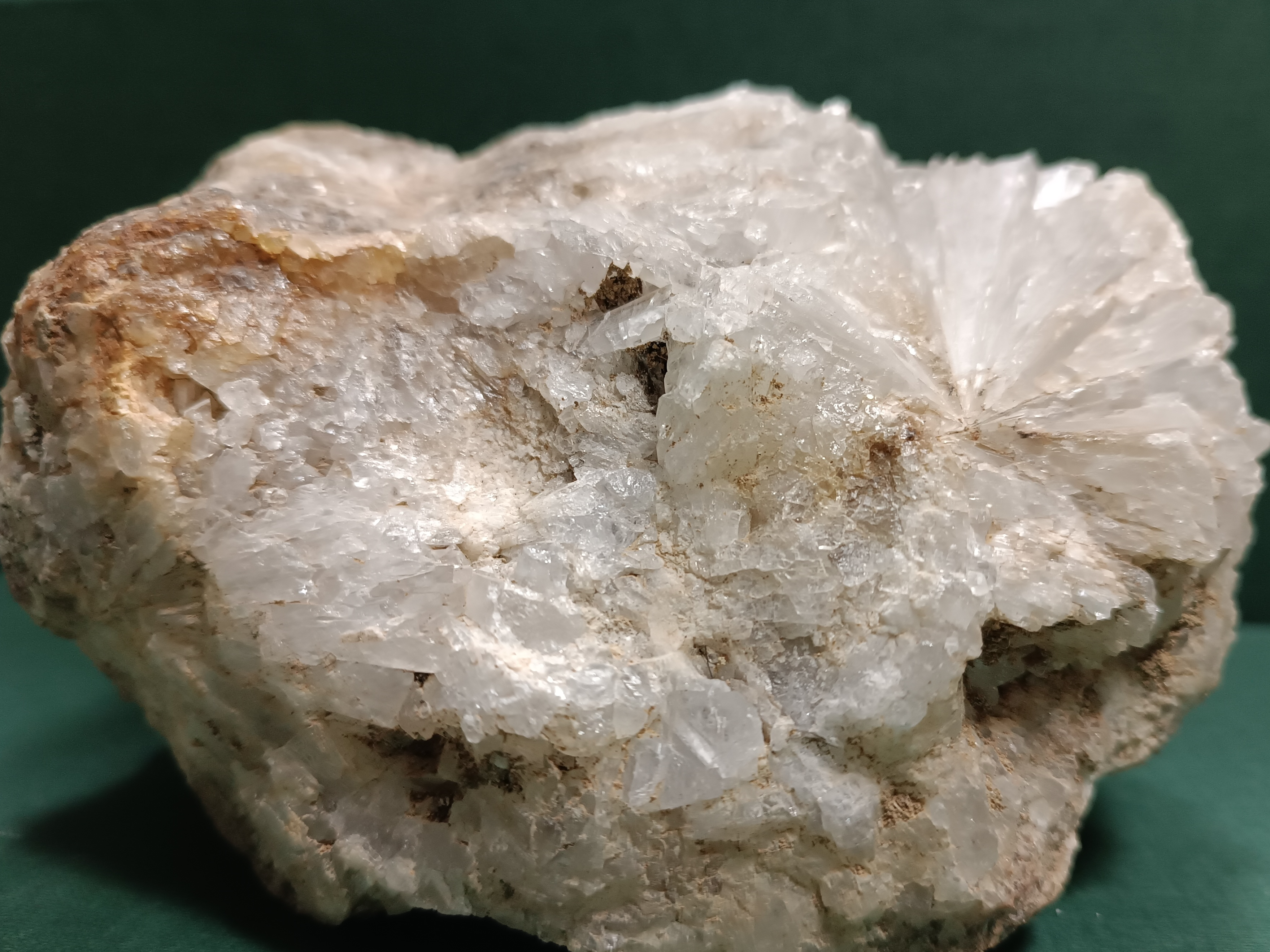
| Global production | Global producers | EU consumption | EU share | EU suppliers | Import reliance |
|---|---|---|---|---|---|
| 232,949t | Iran 37% Spain 33% China 15% Mexico 10% Turkey 4% | 74,697t | 32% | Spain 100% | 0% |
Strontium is traded both in the form of the mineral celestite and in the form of strontium chemicals and metal. Between 2019 and 2024, strontium prices showed significant volatility and an overall strong upward trend. In 2019, the price was 82 USD/t, increasing moderately to 90 USD/t in 2020. A sharp rise occurred in 2021, reaching 210 USD/t, more than doubling the previous year’s value, driven by global supply disruptions and increased demand. In 2022, prices decreased to 143 USD/t, indicating a partial correction, and continued falling in 2023 to 82 USD/t, returning to pre-2021 levels. However, in 2024, there was an extraordinary surge, with the price reaching 390 USD/t, marking the highest value in the entire historical series. However, it should be noted that this 2024 price is likely due to the fact that the United States only imported a small amount of high-value celestite (100 tonnes) from Mexico, which most probably consisted of mineral specimens [USGS- Strontium,2025]. This reduction in imports is the result of its discontinuation as a substitute for barite in drilling muds. Therefore, the 2024 price should be considered with caution, as it is unlikely to be representative of the European market price. Comparing all data series (2000–2024), it is evident that strontium prices remained relatively stable at low levels between 2000 and 2015 (generally below 60 USD/t), began increasing notably from 2016 onwards, and experienced unprecedented peaks in 2021 and especially in 2024. This demonstrates a market characterised by long periods of stability followed by sudden and extreme price escalations in recent years [USGS- Strontium,2025].
Only a few countries produce strontium worldwide, with Spain, Iran, China, and Mexico being the main producers [USGS- Strontium,2025] . From 2020 to 2024, their respective shares of global production were approximately 39%, 34%, 16%, and 11%. Spain has been a major producer since 2021. Spanish strontium production significantly increased from 107 tonnes in 2020 to 200,000 tonnes in 2023.
According to Spanish companies, data from China and Iran may not be entirely reliable due to a lack of transparency and government-provided figures. The main producers in Spain are Kandelium Minerales S.A. and Canteras Industriales S.L. This notable increase in production over the last three years is attributed to the growing demand for strontium ore from China. Other countries with strontium operations include Mexico, Algeria, Morocco, Turkey, and Tunisia.
The recycling rate of strontium is very limited (<1%) [UNEP,2011] due to low recyclability of Sr-containing end-products. Residues resulting from the manufacture of strontium ferrite are recycled/re-generated through a combination of nanostructuration, homogenization and thermal treatment [Bollero et al.,2017]. In the contrast, researchers have shown that Sr recovery by containing end-of-life cathode ray tube is challenging due to the difficulty of lead separation and decontamination [Qi, Y. et al. ,2019].
Strontium is used for the production of pigments, ceramic and special glasses (X-ray safety glass), pyrotechnics, and electronics (semiconductors, permanent magnet) and in metallurgy, among many other industrial applications [2nd assessment of the CRM list,2014] Mesa et al. ,2025]; [USGS- Strontium,2025] [UPB,2022], being the Ferrite magnets (26.3%) and Pyrotechnics industry the main uses (21.2%).
| Use | Percentage | Substitute | Sub share | Cost | Performance |
|---|---|---|---|---|---|
| Master Alloys | 10% | not assessed, below 10% | 100% | No substitute |
Barium and barite appear in some applications as substitutes for strontium, as we will see in the Substitution section. Lithium also serves as a substitute in one specific application, though with limitations.
Strontium market size was at USD 0.56 billion million in 2024 and is projected to grow from USD 0.59 Billion in 2025 to USD billion by 0.9381 Billion in 2035, exhibiting a compound annual growth rate (CAGR) of 4.80% during the forecast period (2025-2035) [Market Research Future,2026]. It is expected that the global strontium market will experience considerable growth at a fast rate. This is due to increased demand from several end-user industries like paints and coatings and the ceramic industry [BGS,2019b] [Blue Quark,2025]. Strontium will very likely continue to be an important material for ferrite-magnets, ceramics, glass, and pyrotechnics production. Strontium also has applications in the medical sector, especially in dental and personal care products, thereby making another significant contribution to this market's growth. As was previously the case, strontium use in oil and gas drilling will continue to be subject to baryte, and oil and gas price trends. Increased wide variety of applications and rising utilization of strontium nitrate in chemical, marine, renewable energy technologies and defense sectors are the key market drivers the market growth. The Strontium Market is experiencing a notable surge in demand due to its increasing applications in the medical field (treatment of osteoporosis). It is also benefiting from its expanding use in construction and building materials (incorporated into cement and concrete formulations to enhance durability and strength) [Market Research Future,2026]. Asia-Pacific region is anticipated to be the most significant market for strontium compounds due to its growing population which boosts the demand in the medical, dental and construction sectors. There is also a conscientious effort to invest in research and innovation which will aid in this region’s dominance [Blue Quark,2025]. Strontrium resources are abundant. According [USGS- Strontium,2025] they may exceed 1 billion t celestine. They include large undeveloped deposits in USA [USGS- Strontium,2025], Argentina, and other countries. Concerning the European resources, in the Miocene basin host of the Escuzar and Montevive deposits in Granada, Spain, where in 2024 200000 t were mined [USGS- Strontium,2025], resources amounting 12 million t celestine have been estimated [IGME,2022] .
Strontium in its elemental form occurs naturally in many compartments of the environment, including rocks, soil, water, and air. It is always present in the air as dust, and it is characterized by high water solubility. The presence of this substance in the air is increased by human activities, such as coal and oil combustion, while its presence in waters is a consequence of rock weathering. When strontium concentration in water exceeds regular concentrations, this is usually caused by human activities. [ECHA, European Chemicals Agency,2025] lists strontium chromate as very toxic to aquatic life with long-lasting effects (hazard codes H400 and H410). In 2018, the Government of Canada issued a Guideline Technical Document for Public Consultation dealing with Strontium in drinking water. The purpose of the consultation is to solicit comments on the proposed guideline, on the approach used for its development and on the potential economic costs of implementing it, as well as to determine the availability of additional exposure data. A maximum acceptable concentration (MAC) of 7.0 mg/L is proposed for strontium in drinking water, based on bone effects in rats and using currently available scientific studies and approaches [Government of Canada,2018].
Market analysis, trade and prices
| Global production | Global producers | EU consumption | EU share | EU suppliers | Import reliance |
|---|---|---|---|---|---|
| 232,949t | Iran 37% Spain 33% China 15% Mexico 10% Turkey 4% | 74,697t | 32% | Spain 100% | 0% |
The dynamics of the strontium market have undergone significant transformations, shaped by shifts in global production patterns and technological advancements. Iran and Spain are the two most significant strontium producers worldwide followed by China and Mexico. Other countries with strontium operations include Algeria, Morocco, Turkey, and Tunisia. Strontium carbonate is the most traded strontium compound and from which other strontium compounds can be derived as well [USGS- Strontium,2025]. Spain ranks as the leading supplier of Sr in Europe, furnishing 99% of the supply, thereby ensuring the EU’s minimal import reliance [European Commission, 2023]
The global strontium market is fragmented, with the presence of major players that acquire smaller companies and develop innovative strontium products—such as carbonate, sulfate, nitrate, and celestite as a raw product—to strengthen their position in a competitive environment. Some of the key participants in the strontium market include Canteras Industriales, S.L. (Spain), producer of celestite/sulfate; Kandelium (Germany), specialized in strontium carbonate; Química del Estroncio S.A.–Fertiberia (Spain) or Basstech International (USA), both focused on strontium nitrate; Minas de Celestita, S.A. de C.V. (Mexico), producer of celestite/sulfate; Vishnu Strontium Private Limited (India); and several Chinese companies such as Redstar Chemical Group, Hebei Xinji Chemical Group, Gansu Minle Fuyuan Chemical, Chongqing Kinglong Fine Strontium Chemical, and Joyieng Chemical Limited [Market Research Future, 2024]
| Mining | |
|---|---|
| CN Code | Title |
| 28369200 | Strontium carbonate |
The following codes should be added and considered in other figures, because in the statitisc and graphics, is not possible differenciate both, and therefore in easy to correlate with the production of raw material (as sulfate)
| CN Code Processing/refining | Title |
| 28332950 | Strontium Sulfate |
| 28051910 | Strontium and Barium |
The EU is a net importer of oxides, hydroxides, peroxides, of Strontium and Barium (CN 2816400) with a total export of 12,295.6 tonnes from 2002 to 2023. The export decreased drastically in from 2004 (3,126.124 t) to 2005 (31.9 t) and did not start to recover until 2013, maintaining constant values, in general terms, until 2023. The average EU import of oxides, hydroxides, peroxides, of Strontium and Barium was 1,154.2 tonnes/year between 2002 and 2023 and it is almost constant, with a slight growth, from 2010 to 2023 at an average yearly import of 1,213.6 tonnes.
Following discussions with Kandelium, one of the world's leading producers of strontium sulfate and operator of the celestine deposits located in the province of Granada (Spain), it was confirmed that they use the export Combined Nomenclature (CN) code 25309030 for this material.
For this dataset, imports and exports of the suggested CN codes must be included, as not all trade is in strontium carbonate, but also in sulfates.
The main import partners of EU are China (35.59%), Mexico (27.83%), Japan (5.46%) between 2000 and 2023. China was the main supplier until 2016, but Mexico overtook others as the main import partner until 2020, when Japan became the main importer for the last three years. There are EU trade agreements in place with Japan, Mexico, and Canada [European Commission,2019]. There are no exports, quotas or prohibition in place between the EU and its trade partners (Morocco imposes export restrictions on strontium carbonate, but between 2012 and 2016 or between 2016-2020, it was not a trade partner of the EU) [OECD,2019]
Strontium is traded both in the form of the mineral celestite and in the form of strontium chemicals and metal. In previous years (2000-2015), celestite prices were frequently below the 50 USD/t, on average. Since 2016 prices experienced a significant increase, reaching an all-time high in 2019 at 82 USD/t. After a small decrease in 2020, and contrary to expectations, the price rose dramatically in 2021 reaching 210 USD/t. However, prices fell again in the following two years, reaching in 2023 a price similar to pre-2021 prices. Apparent consumption of total strontium decreased by 64% in 2023 compared with that in 2022. The decrease in 2023 was likely the result of decreased drilling activity as well as decreased consumption of strontium compounds [USGS- Strontium,2025]. In the last year, 2024, the sharp increase in the price of celestite stands out, rising from 82 USD/t to more than 390 USD/t. The 2024 price is likely influenced by the very small volume of high-value celestite imported by the United States from Mexico (100 t), probably consisting of mineral specimens [USGS- Strontium,2025] . The decline in imports reflects its discontinued use as a barite substitute in drilling muds; therefore, this price should be treated with caution and is unlikely to represent the European market.
Strontium market size was at USD 0.56 billion million in 2024 and is projected to grow from USD 0.59 Billion in 2025 to USD billion by 0.9381 Billion in 2035, exhibiting a compound annual growth rate (CAGR) of 4.80% during the forecast period (2025-2035) [Market Research Future,2026] . It is expected that the global strontium market will experience considerable growth at a fast rate. This is due to increased demand from several end-user industries like paints and coatings and the ceramic industry [BGS,2019b] [Blue Quark,2025] . Strontium will very likely continue to be an important material for ferrite-magnets, ceramics, glass, and pyrotechnics production. Strontium also has applications in the medical sector, especially in dental and personal care products, thereby making another significant contribution to this market's growth. As was previously the case, strontium use in oil and gas drilling will continue to be subject to baryte, and oil and gas price trends. Increased wide variety of applications and rising utilization of strontium nitrate in chemical, marine, renewable energy technologies and defense sectors are the key market drivers the market growth. The Strontium Market is experiencing a notable surge in demand due to its increasing applications in the medical field (treatment of osteoporosis). It is also benefiting from its expanding use in construction and building materials (incorporated into cement and concrete formulations to enhance durability and strength) [Market Research Future,2026]. Asia-Pacific region is anticipated to be the most significant market for strontium compounds due to its growing population which boosts the demand in the medical, dental and construction sectors. There is also a conscientious effort to invest in research and innovation which will aid in this region’s dominance [Blue Quark,2025]. Strontrium resources are abundant. According [USGS- Strontium,2025] they may exceed 1 billion t celestine. They include large undeveloped deposits in USA, Argentina, and other countries. Concerning the European resources, in the Miocene basin host of the Escuzar and Montevive deposits in Granada, Spain, where in 2024 200000 t were mined [USGS- Strontium,2025] , resources amounting 12 million t celestine have been estimated [IGME,2022].
Demand
EU consumption of strontium at the extraction stage is represented by HS code CN 28369200 with import and export data from sourced from Eurostat (2025) and production data from WMD (2025). The main strontium producer in the EU is Spain (Kandelium Minerales S.A. and Canteras Industriales S.L. are the companies operate the strontium sulfate deposits located both in Granada) and the amount of production is sufficient to supply almost 100% of EU demands.Strontium demand in Europe increased by 38.18% between 2016 and 2020. This increase reflects a growing interest or application of the material over the period. However, a year-on-year analysis highlights a sharp decline in the most recent data: between 2020 and 2021, demand rise from 56902 tonnes to 133546 tonnes, falling softly in 2022 to 116.718 tonnes and drastically to 33319 in 2023, suggesting market saturation, changes in end-use industries, or external factors affecting supply chains and consumption patterns.
To be more accurate, the produccion of this Figure 8 must be uptaded with this data of production (taken from the Spanish national Mining Statistics) [MITERD,2026]
| EU Production | 2020 | 2021 | 2022 | 2023 | 2024 | 2025* |
| SPAIN (100% EU Procuction) | 121920 | 281535 | 246706 | 72585 | 92842 | 100000 |
And the CN code 28332950 must be added to this data, considering the total of both CN Codes.
The EU consumption of strontium carbonate (CN 28369200) is evaluated at extraction and processing stages. Spain is the primary producer of strontium within the European Union, and its production capacity is sufficient to meet nearly 100% of the EU’s demand. This is evidenced in the figure, which shows that production consistently matched demand throughout the 2012–2020 period. Between 2020 and 2024, the EU’s apparent consumption of strontium averaged 161.463 tonnes per year.
Spain maintains its status as the primary strontium supplier to the EU, furnishing 99% of the supply, thereby ensuring the EU’s minimal import reliance [European Commission,2023]
The uses of strontium are highly diverse. Currently, the primary application of strontium lies in the production of ferrite magnets [Kim, M., Lee, H., & Kim, J.,2020] as strontium carbonate enhances both the coercive force and the thermal and electrical resistivity of these magnets. Additionally, strontium carbonate is a widely used component in the manufacturing of glass and ceramics, where it contributes to increased durability and hardness, as well as a reduction in microfractures.It is also used in industrial paints, as coating a substance with strontium carbonate makes it resistant to corrosion and the effects of excessive heat. As a result, carbonate-based paints are widely used in the naval and aerospace industries. We must not forget the most traditional and longstanding use of strontium, which has been in pyrotechnics: Strontium nitrate, when volatilized, imparts a vivid crimson red color to the flame, making it highly valued both for signaling purposes and in artistic fireworks displays ([USGS- Strontium,2025], [UPB,2022]).
Figures 9 and 10 summarize the consumption of strontium by application at the global and European scales. Globally, 29.9% of strontium is used in pyrotechnics and signaling, the same percentage as in magnets. 23.7% of strontium is used in drilling fluids, and 16.5% is evenly distributed among various industries: master alloys, glass production, zinc production, and pigments and fillers. At the European scale, the highest consumption is for the production of ferrite magnets (26.3%), followed by pyrotechnics (21.2%) and zinc refining (11.1%). The remaining percentage is distributed among other industries as master alloys (10.1%), paint pigments (7.1%), dietary suplements (6.1%), medicines (6.1%), toothpaste (5.1%), fluorescent lights (4.0%) and finally others (3.0%).
| Applications | 2-digit NACE sector | Value added of NACE 2 sector | 4-digit CPA |
|---|---|---|---|
| Ferrite Magnets | C25 - Manufacture of fabricated metal products, except machinery and equipment | 220,000M€ | C25 - Manufacture of fabricated metal products, except machinery and equipment |
| Pyrotechnics | C20 - Manufacture of chemicals and chemical products | 146,000M€ | C20 - Manufacture of chemicals and chemical products |
| Zinc Refining | C24 - Manufacture of basic metals | 74,046M€ | C24 - Manufacture of basic metals |
| Master Alloys | C24 - Manufacture of basic metals | 74,046M€ | C24 - Manufacture of basic metals |
| Paint Pigments | C20 - Manufacture of chemicals and chemical products | 146,000M€ | C20 - Manufacture of chemicals and chemical products |
| Dietary Supplements | C20 - Manufacture of chemicals and chemical products | 146,000M€ | C20 - Manufacture of chemicals and chemical products |
| Medicines | C20 - Manufacture of chemicals and chemical products | 146,000M€ | C20 - Manufacture of chemicals and chemical products |
| Toothpaste | C20 - Manufacture of chemicals and chemical products | 146,000M€ | C20 - Manufacture of chemicals and chemical products |
| Fluorescent Lights | C23 - Manufacture of other non-metallic mineral products | 90,000M€ | C23 - Manufacture of other non-metallic mineral products |
| Others | C27 - Manufacture of electrical equipment | 125,000M€ | C27 - Manufacture of electrical equipment |
In recent decades, the application landscape for strontium has evolved significantly due to technological changes. In the following, for each of these categories the specific applications described.
Nearly 80% of permanent magnets contain rare-earth elements (REE), which are costly and largely sourced from Chinese production. In this context, strontium-based magnets have emerged as a promising alternative [Mesa et al. ,2025] notable developments include FeCo nanowire–strontium ferrite powder composites, the first dense REE-free permanent magnets based on strontium hexaferrite fabricated via the cold sintering process, and anisotropic strontium hexaferrite nanomagnets . Anisotropic strontium ferrite powder is employed during manufacturing to fine-tune the magnetic properties of permanent magnets bacause it was demonstrated that increasing the content of strontium ferrite powder enhances magnetic properties and hardness, although it reduces tensile strength.
Strontium ferrite magnets (SrFe12O19) are commonly used in small motors, loudspeakers, electronics, and toys due to their favourable magnetic properties and low cost [Kanagesan et al.,2013]; [Harris and Andalib,2022]).
A common application of strontium nitrate (Sr(NO3)2) is as a colouring agent in pyrotechnic applications. It is used to produce bright red colours in fireworks or warning flares for example (alternatively strontium chloride, strontium oxalate, and strontium sulfate can be used). In combination with copper a purple colour can be achieved. Strontium nitrate also plays an important role in technical pyrotechnics [Tropag,2025]
In Zinc production, Sr is added in the electrolysis process to remove lead (Pb) impurities and improve final product quality. In the electrolytic production of zinc, strontium carbonate is used to ensure its deposition on the cathode and to remove lead impurities [USGS- Strontium,2025]
Metallic strontium is used in various alloys and as a modifying agent in the production of hypo-eutectic silico-aluminum alloys. In the steel industry, it is used for desulfurizing steel [Huang, Z. et al ,2023]. In aerospace and automotive applications strontium metal is added to aluminium alloys to improve strength and ductility of castings.
Strontium carbonate is used in the glazing and enameling of ceramics for tableware, enhancing its resistance to abrasion and scratching, preventing the formation of bubbles during the firing process, as well as providing greater shine and, in some cases, offering better performance than lead, without the risk of toxicity.
See medicines just bellow
Strontium compounds such as strontium ranelate (C12H6N2O8SSr2) have been used for their potential to increase bone density and reduce the risk of fractures in postmenopausal women with osteoporosis ([Reginster et al.,2015], [Li, N. et al.,2019], [Mukherjee, S. and Mishra, M. ,2021]). This active ingredient serves the following purposes: promoting the proliferation of bone-building cells, inhibiting the growth of bone-degrading cells, promoting the formation of collagen. Strontium isotope 89Sr is given intravenously for treating prostate cancer and advanced bone cancer [Zhang W. et al.,2013] .
Strontium chloride (SrCl2) hexahydrate is added to toothpaste to relieve pain in teeth sensitive to low temperature and high pressure.
In applications where phosphorescent pigments are required, such as emergency exit signs, strontium oxide aluminate is used due to its superior brightness and longer afterglow compared to other pigments. Afterglow or phosphorescent materials achieve their luminous properties by incorporating a phosphorescent pigment, typically strontium aluminate (SrO·Al2O3) doped with rare earth elements. This ceramic-like material is produced through a sintering process at high temperatures. The resulting sintered blocks are then crushed and ground in a complex procedure. Finally, the raw pigment is sieved to achieve the desired fineness and particle size. Larger particles tend to improve luminosity, but strontium aluminate is very hard and abrasive during processing. With a Mohs hardness of 9, it is almost as hard as diamond. Consequently, depending on the substrate material and further processing, finer grades may be required [Huang, Z. et al ,2023]
Strontium is still utilised in the glass industry (used in numerous applications for optics, glassware, lighting, fiberglass, laboratory glass, and pharmaceuticals) to improve the optical and mechanical properties of materials, enhance transparency, increase refractive index, and reduce chromatic aberration in optical lenses [Ramzi, Z. et al. ,2016] , [Bouabdalli, E.M., et al.,2023] (
Strontium carbonate is used in semiconductor (chip) manufacturing primarily as a high-purity additive for producing strontium titanate (SrTiO?), a material with excellent dielectric properties essential for advanced capacitors and thin-film applications. Additionally, in the field of electric vehicle (EV) batteries, strontium carbonate is being investigated as a potential component in anode materials to improve structural stability and enhance charge–discharge performance, supporting the development of safer, more efficient battery technologies [Geslin, A. et al. ,2025] .
Strontium plays a crucial role in the development of permanent magnets, particularly in the form of strontium hexaferrite (SrFe??O??), a hard magnetic material widely used due to its high coercivity, moderate magnetization, and chemical stability. These magnets are commonly synthesized through techniques such as sol-gel or electrospinning, where the morphology of the resulting nanostructures significantly influences their magnetic properties. For instance, tailoring the shape and size of strontium hexaferrite nanofibers via controlled calcination parameters has been shown to enhance magnetic performance, including increased saturation magnetization and coercivity [Vats, N. et al.,,2025]
In pyrotechnics, strontium is used for the brilliant reds in fireworks and warning flares and in some ‘glow-in-the-dark’ paints and plastics.
In the case of drilling fluids, celestite (as raw product) is utilised as additives to enhance drilling performance in the oil and gas sector, preventing the formation of scales, such as calcium carbonate and barium sulfate [USGS- Strontium,2025]
| Use | Percentage | Substitute | Sub share | Cost | Performance |
|---|---|---|---|---|---|
| Master Alloys | 10% | not assessed, below 10% | 100% | No substitute |
Barium and barite appear in some applications as substitutes for strontium, as we will see below. Lithium also serves as a substitute in one specific application, though with limitations.
Barium can serve as a substitute for strontium in ceramic ferrite magnets; however, the resulting barium-based composites exhibit a lower maximum operating temperature compared to those containing strontium. Permanent magnets made of hard ferrite consist of iron oxide and additionally either strontium (Sr) or barium (Ba, a heavy metal). For the magnetic properties, it is irrelevant whether barium or strontium is used; mostly it is the latter, if only because of the lower costs and better availability [ML,2022]
When drilling muds, the alternative material for strontium carbonate (SrCO3) is barite, which is normally preferred, but celestite may substitute for some barite, especially when barite prices are high [USGS,2022].
In pyrotechnic applications, replacing strontium is particularly challenging due to the difficulty in replicating the distinctive brilliance and visibility provided by strontium compounds. Regarding more environmentally friendly pyrotechnics, strontium can be replaced by lithium. Lithium and its salt compounds colour the flames red. So far, it has been used less in fireworks [Artelt, J.,2021]
Supply
Only a few countries produce strontium globally. The main producers are Spain, Iran, China, and Mexico, with respective shares of global production between 2020 and 2024 estimated at 38%, 37%, 19%, and 6%. Spain has become a major producer since 2021. The companies Kandelium Minerales S.A. and Canteras Industriales S.L. operate the strontium sulfate (celestite) deposits located in the province of Granada (Spain). The volume of production is sufficient to meet nearly 100% of EU demand.
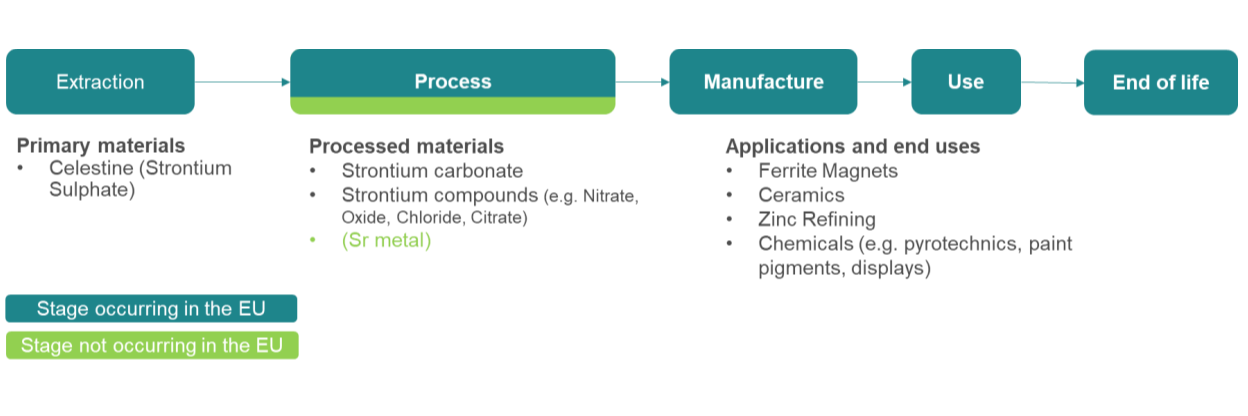
The value chain of strontium (modified from [MSA,2023]), from extraction to end of life starts with primary materials celestite (Strontium sulfate), which are processed into strontium carbonate and other compounds. These processed materials are then used in manufacturing applications like ferrite magnets, ceramics, zinc refining, and chemicals.
Among naturally occurring minerals, only two- celestine (SrSO4) and strontianite (SrCO3)- contain sufficient concentrations to be considered economically viable sources. Other minerals, which can also be exploited for various industrial applications but much less common, are strontium fluoride, molybdate, and titanate (SrF2, SrMoO4, and SrTiO3 repectively). These minerals are found in a variety of geological settings, including sedimentary (disseminatios in limestones and sandstones, occurring in pockets or lining cavities within these rocks), igneous, and metamorphic rocks. Celestine is by far the most abundant and comemercially significant source of strontium. Despite being relatively common in sedimentary environments, economically viable celestine deposits are rare. Strontianite is the second most important stromtium-bearing mineral, although it is significantly less abundant than celestine. From an industrial perspective, strontianite is more desirable, at it is chemically closer to strontium carbonate (SrCO3), the primary commercial strontium compound. However, only a few aconomically exploitable strontianite deposits have been identified-Strontian, Argyll (Scotland) and Sierra Mojada (Mexico) [Mesa et al. ,2025]
Strontium mineral deposits can be mainly classified into two broad groups [Ortega Huertas, M.,1992]: (i) sedimentary and (ii) hydrothermal.
i. Sedimentary, by far the most important, occur in lacustrine or lagoon-type geological environments, essentially associated with gypsum, anhydrite, carbonates, clays, and sandstones, with celestine being the primary mineral. Although celestine is expected to precipitate during the evaporation of seawater, it never forms significant accumulations. However, the largest known celestine bodies are hosted in carbonates and shallow-water evaporites, commonly intergrown with clastic sediments [Hanor, J.S.,2004]. Based on the relationship of the associated sedimentary successions and their stable isotope geochemistry, two main mechanisms have been proposed for the formation of massive celestine deposits [Hanor, J.S.,2004] :
a) A syngenetic mechanism, with primary precipitates derived from evaporated seawater.
b) A diagenetic (epigenetic) replacement of carbonates and sulfate evaporites [Baker, P. and Bloomer, S. H. ,1988]. Celestine has also been found in aqueous environments, where it crystallizes separately from gypsum or anhydrite solutions with strontium concentrations above 24 mg/l.
ii. Hydrothermal, formed through the consolidation of residual magmatic fluids (those remaining after rocks such as granites and pegmatites have formed). They are also found in veins with fluorite, barite, calcite, lead and zinc sulfides, and strontianite, where the exploitation of strontium minerals is a secondary activity. Such is the case for the deposits in Sierra Mojada (Mexico) and Salem (Kentucky, USA).
All major celestine bodies in the world are associated with evaporite deposits: the Cretaceous deposits in the Neuquén region of Argentina [Brodtkorb, M. K. et al.,1982], in the Sabinas Basin of Mexico [Gonzalez-Sanchez, F. at al. ,2009], and in the Cenozoic Ulas-Sivas basin in east-central Turkey [Tekin, E. at al,2002] . Elsewhere, minor replacements of calcium sulfate evaporites by celestine have also been described under non-economic conditions [Dill et al.,,2009] ; [Taberner et al., ,2002]
| Country | Resources (tonnes) |
|---|---|
According to the latest USGS data, global strontium resources may exceed 1 billion tonnes distributed between China, Iran, Spain, the United States, Mexico, and Argentina ([Mesa et al. ,2025] [USGS- Strontium,2025])
| Country | Resources (tonnes) |
|---|---|
|
Spain |
12350000 |
| Iran | 7000000 |
| China | 12000000 |
| Mexico | 1500000 |
| Ukranie | 1687643 |
The latest survey from [USGS,2025] stimates reserves of 12 million tonnes of strontium in China and 7 million tonnes in Iran, while the Spain date appears as "not available". Nevertheless, after a conversation with the main and only celestine producers in Europe, Kandelium Minerales y Canteras Industriales S.L., more tahn 12 million tonnes has been estimated in Spain. In this way, these three countries would be the ones that hold the largest strontium reserves worldwide. However, the figures for China and Iran are based just on government reports. In Mexico, although the USGS document lists the reserve data as unavailable, a 2022 report by the Mexican Ministry of Economy titled "Celestine Market Profile" [Secretaría de Economía,2022] states that the reserves, estimated across four sites, amounted to a total of 1,463,462.75 possible tonnes. For other countries, such as Argentina or the United States, no data is available. A recent review by [Rosa, D. et al.,2023] reports over 9 million tonnes of strontium reserves in Greenland, yet no exploitation activity is known in the area. A similar case occurs in Egypt, where reserves strontium reserves have been estimated on approximately 3 million tonnes [El-Amir, A.A.M., et al., ,2021] . Additionally, the European onshore CRM resource evaluation v1 report [GSEU,2024] , indicates that Ukranie has about 1.7 millons tons as reserves.
| Country | Classification | Quantity (Mt of ore) | Grade (% Strontium ) | Reporting code | Reporting date | Deposit, Source | ||
|---|---|---|---|---|---|---|---|---|
| Greenland | 4 – historical or non-compliant | 20621069 | 2024 | Karstryggen [GSEU,2024] |
|
|||
| Spain | 4 – historical or non-compliant | 5000000 | 2024 | Escúzar and Aurora [GSEU,2024] | ||||
| UK | 4 – historical or non-compliant | 16268000 | 2024 | Yate [GSEU,2024] |
The European deposits are located in Spain, in the south of the country, in the province of Granada. There are two mines currently supplying celestine: Montevive and Escúzar, operated by Canteras Industriales and Kandelium Minerales, respectively.
| Country | Classification | Quantity (MT of ore) | Grade (% Sr) | Reporting Code | Reporting date | Source | ||
| Spain | 4 – historical or non-compliant | 12350000 | 60 | Direct communication from companies | ||||
| Ukranie | 1 – mineral reserves | 1687643 | [GSEU,2024] |
The only strontium producer in Europe is Spain, with just two active mining operations located in the south of the country, in Granada: the Escúzar Mine, operated by Kandelium Minerales, and the Montevive Mines, operated by Canteras Industriales S.A. The data presented here come from direct communication with the operators (2025).
Montevives Mine: Following an extensive drilling campaign, they confirm that Montevive/Canteras Industriales, S.L. holds reserves (proven, probable, and estimated) of over 10 million tonnes of celestite, with SrSO4 content ranging between 60% and 92%.
Escúzar Mine: In this mine, the mineralized layer is well mapped, and the estimated reserves amount to 8 million tonnes with a concentration ranging from 30% to 60%. After processing in the treatment plant—which includes crushing, dense media pre-concentration, grinding, and flotation—approximately 1,600,000 tonnes are obtained with a concentration of 92–94%. An additional 750,000 tonnes are recovered from the waste materials, resulting in a total of 2,350,000 tonnes of strontium sulfate concentrate.
This Figure 13 needs to be updated. The world mine production of strontium in the last years are as follow (Data from Spain comes from [MITERD,2026] and data from other countries comes from [USGS- Strontium,2025]
| 2020 | 2021 | 2022 | 2023 | 2024 | |
| Spain | 121920 | 281535 | 246706 | 72585 | 92842 |
| Iran | 35000 | 110000 | 110000 | 200000 | 200000 |
| China | 50000 | 80000 | 80000 | 80000 | 80000 |
| Mexico | 38000 | 21400 | 22000 | 8000 | 19000 |
| RoW | 670 | 700 | 700 | 700 | 700 |
Only a few countries produce strontium worldwide. The global primary production of strontium concentrate (mainly celestite) since 2000 can be seen in Figure 1 [USGS- Strontium,2025]. Spain, Iran, China and Mexico consist the main producers. Their world production shares in 2021 were about: 42%, 25%, 22%, 10%. Iran consist a major producers since 2017. Spanish strontium production has been significantly increased between 2019 (from 162.327 tonnes) to 2022 (246.706 tonnes), with a peak of 281.535 tonnes in 2021, according with Spanis Mining Stats . The main producer in Spain is Kandelium. A notable increase in production is taking place during the last 3 years due to the growth in demand for strontium ore by China. Although China has proven reserves its celestite has worse characteristics than celestite found in Spain or Mexico. Therefore, China has to rely on imports
281.535 ton en 2021
246.706 en 2022
The recycling rate of strontium is very limited (<1%) ([UNEP,2011]) due to low recyclability of Sr-containing end-products. Residues resulting from the manufacture of strontium ferrite are recycled/re-generated through a combination of nanostructuration, homogenization and thermal treatment [Bollero et al.,2017]. In the contrast, researchers have shown that Sr recovery by containing end-of-life cathode ray tube is challenging due to the difficulty of lead separation and decontamination [Qi, Y. et al. ,2019].
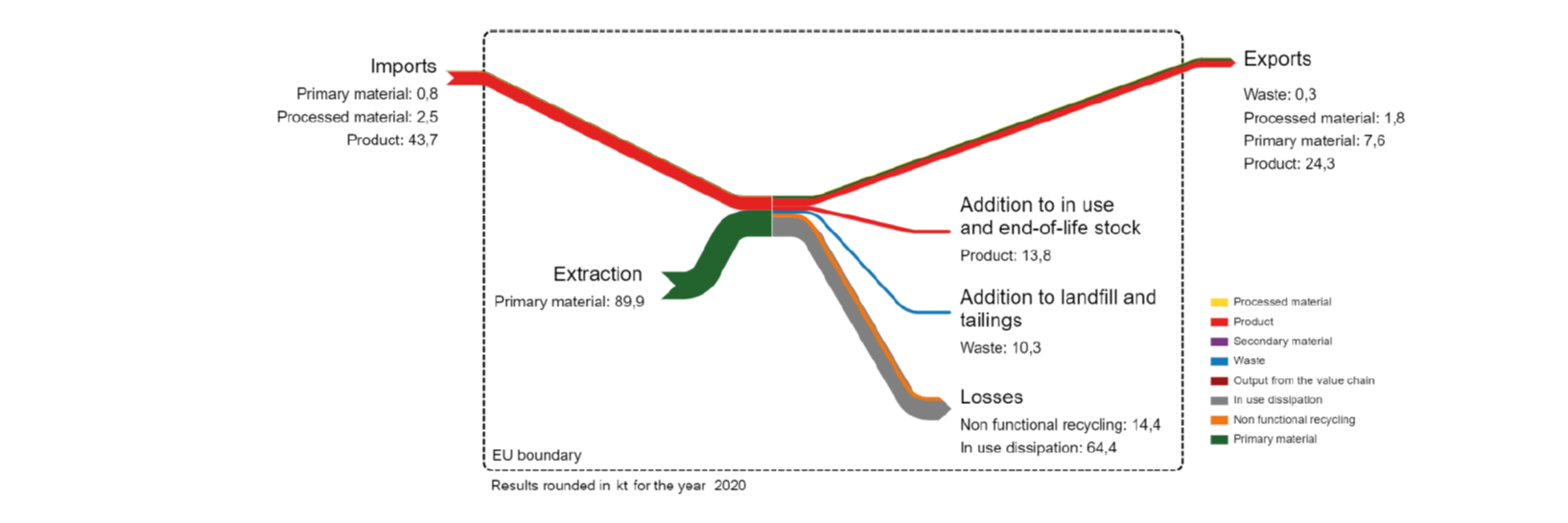
| MSA Flow | Value | ||
|---|---|---|---|
Circular economies rely on the incorporation of recycled materials to replace primary raw materials, yet the share of recycled strontium in the European Union remains negligible, as reported by the European Commission (2023). The ‘‘End-of-Life Recycling Input Rate’’ (EOLRIR), a key parameter that represents the supply of secondary raw materials, reports a 0% rate for strontium in the European Union [Eurostat,2023].
However, there is an untapped potential in the recycling of stron- tium from waste CRTs. Since the late 1990s, efforts focused on the development of recycling technologies for producing secondary raw materials from CRT glass ([Qi, Y. et al. ,2019] and references therein)., Consequently, most efforts focused on the extraction and ‘‘detoxification’’ of the glass, involving techniques such as strontium leaching from foam glass [Yot, P.G. and Mear, F.O.,2010] . Similarly, [Xing, M. et al.,,2018] proposed a process for the extraction of barium and strontium from waste CRT glass based on pyrometallurgy and phase separation, achieving the removal of 99.4% of the strontium.
The future of strontium prod and references therein).,uction, as well as other critical minerals, hinges on improving its circularity and addressing environmental impacts. The negligible EOLRIR for strontium in the European Union highlights the need for intensified recycling efforts, particularly from waste CRTs and strontium ferrite waste. Emerging applications in mag- net technology, medicine, and smart materials present new opportuni- ties, potentially reducing reliance on rare-earth elements and fostering innovation.
Addressing the environmental implications of strontium produc- tion is imperative. Initiatives like the ROTATE project [ROTATE project,2025], funded by the European Union, aim to provide sustainable solutions and envi- ronmental assessments for mining activities, exemplified by the case study at Canteras Industriales, S.L.. Such efforts are crucial for establishing environmentally responsible practices in the strontium supply chain.
The advancement of celestine beneficiation techniques, coupled with a focus on recycling and environmental sustainability, is instrumental in meeting the growing demand for strontium. Continued research and innovation are essential to overcoming current challenges and harnessing the full potential of this critical mineral. As the demand for strontium evolves, driven by emerging technologies and expanding industrial applications, the sustained study and optimisation of stron- tium extraction and processing methodologies will play a pivotal role in ensuring a stable supply chain and enhancing the purity of strontium compounds.
The beneficiation of strontium-bearing ores in mineral processing employs a range of techniques adapted to the specific characteristics of each deposits. Celestine-the primary strontium mineral-is typically processed to produce a concentrate conteining over 90% SrSO4. This high-grade celestine concentrate can either be sold directly or further refined to produce strontium carbonate (SrCO3), one of the most commonly used commercial forms of strontium .
Historically, the beneficiation process evolved from manual sorting to more advanced methods, including size classification, gravity separation, flotation, and dense media sapearation. Recent advancements have focused on the use of fine ferrosilicon media in hydrocyclone-based dense media separation systems, which have significantly improved both the recovery rate and purity of celestine concnetrates. In addition, emerging methods such as shear flocculation have shown potential, particularly when using surfactents like sodium dodecyl sulfate (SDS) and Aero 845, yielding promising results in celestine recovery [Mesa et al. ,2025].
Other considerations
Elemental strontium (Sr) is generally considered safe for humans, particularly at low concentrations. Strontium can be ingested through food and drinking water, but it does not present a significant health risk. The only strontium compound considered hazardous to human health, even in small amounts, is strontium chromate (SrCrO4), which is known to cause lung cancer. However, the risks associated with exposure to this compound have been significantly reduced through safety protocols in industries. The ingestion of the radioactive isotope strontium-90 (90Sr) through contaminated food and water is a major exposure pathway, which can lead to health problems such as bone disorders and bone cancer [Höllriegl, V. and München H.Z. ,2011] .
Strontium chromate is listed on the List of Substances Subject to Authorization (SVHCs) and in ANNEX XIV of REACH [ECHA, European Chemicals Agency,2025] due to its presumed carcinogenicity to humans (class 1B). Additionally, the European Agency for Safety and Health at Work [EASHW,2025] classifies strontium chromate as a substance that may cause cancer (hazard code H350) and is harmful if swallowed (H302). The radioactive isotope 90Sr, along with all radionuclides emitting β-radiation carcinogenic to humans, is classified in Group 1 of carcinogenic substances [IARC,2012]
Environmental impact assessments, such as Life Cycle Assessment (LCA), typically encompass various stages, including the extraction, transportation, and processing of virgin ores to obtain celestine concentrate. These impacts stem from the consumption of resources (e.g., diesel, electricity, water) and the generation of both hazardous and non-hazardous waste. Furthermore, the environmental footprint is significantly influenced by the transportation of celestine concentrate between geographically dispersed facilities involved in strontium-based product manufacturing. In some cases, the emissions associated with transporting the concentrate may surpass those of the production process itself. Relocating value-adding stages closer to the mining sites could reduce environmental impacts and increase economic returns by minimizing transport-related emissions. However, this approach depends on the development of metallurgical expertise within the European Union. Future research should focus on quantifying the environmental impacts of strontium production using LCA, especially given the complexity of its global supply chain.
In 2018, the Government of Canada released a Technical Guideline Document for Public Consultation regarding strontium in drinking water. The consultation aims to gather feedback on the proposed guideline, the development approach used, the potential economic costs of its implementation, and to assess the availability of additional exposure data. A maximum acceptable concentration (MAC) of 7.0 mg/L for strontium in drinking water is proposed, based on bone effects observed in rats and current scientific studies and methodologies [Government of Canada,2018]
Industrial minerals in general, and celestite (strontium sulfate) in particular, have experienced notable price fluctuations over the last years. Between 2000 and 2015, celestite prices remained relatively low, averaging below 51 EUR/tonne. However, prices began to rise significantly from 2016 onwards, reaching an all-time high of 82 USD/tonne in 2019. After a slight decrease in 2020, prices surged unexpectedly to 210 USD/tonne in 2021. Although prices fell again in 2022 and 2023, they rose dramatically in 2024, reaching 390 USD/tonne, representing the highest price recorded in recent decades. The exploitation of celestite in Granada (Spain), specifically at the Montevives and Escúzar mines, remains remarkable as they are the only producers in Europe and among the few globally. Despite a 10% increase in celestite consumption compared to 2019, likely due to improved economic conditions following the COVID-19 recession [USGS- Strontium,2025], the apparent consumption of total strontium decreased sharply by 64% in 2023 compared to 2022, reflecting reduced drilling activity and lower demand for strontium compounds. This recent price spike in 2024 suggests growing market tensions and potential supply risks for strontium-based industries.
According to [UN COMTRADE ,2025], the export value of strontium and its compounds (HS Code 283692) in USD is negligible compared to the total exports of the main exporting countries, such as China, Spain, Italy, and Japan.
| Country | Export value (USD) | Share in total exports |
|---|---|---|
| China (2024)-283692 | 8,550,741 | 0.0 |
| Spain (2024)-283692 | 5,267,750 | 0.0 |
| Italy (2024)-283692 | 1,355,383 | 0.0 |
|
Japan (2024)-283692 |
1,007,218 | 0.0 |
We do not found any concerns about the social or ethics aspect of strontium at mining stage.
In recent years, the role of strontium has shifted significantly from its traditional use in CRT glass to emerging applications in green and advanced technologies. According to [Mesa et al. ,2025] and references therein, with nearly 80% of permanent magnets relying on rare-earth elements (REEs), which are costly and largely sourced from China, strontium-based magnets have gained attention as a sustainable alternative. Innovations include FeCo nanowire-strontium ferrite composites, REE-free dense strontium hexaferrite magnets via cold sintering, and anisotropic strontium hexaferrite nanomagnets, which offer tailored magnetic properties and improved hardness. Beyond magnetics, strontium-based nanoparticles are being explored in medicine for bone and tissue engineering due to their biocompatibility [Mukherjee, S. and Mishra, M. ,2021]. Additionally, strontium aluminate materials are being developed for smart mechanoluminescent applications such as stress visualization, crack detection, and energy-efficient lighting. These include smart windows made from recycled plastics embedded with strontium aluminate phosphors and photochromic translucent wood for sustainable architecture ([Huang, Z. et al ,2023] ; [El-Hefnawy et al.,2022] ; [Binyaseen, A.M. et al.,2024]).
Some other examples of recent research in this field are: [Afsahi et al.,2025] demonstrated that introducing steam into the methane reduction of celestite significantly enhanced the reaction rate—lowering the activation energy from 193 to 112 kJ/mol, while preventing carbon buildup and avoiding oxidation of the strontium sulfide product, thus enabling direct methane use without reforming. [El-Amir et al.,2021] developed calcium-strontium aluminate cement (CSAC) from celestite and alumina, achieving high compressive strength (~62 MPa) and favorable setting times, positioning celestite as a viable feedstock for sustainable construction materials. [Mesa et al. ,2025] highlighted the role of celestite and strontianite in ceramic magnets and smart materials, emphasizing eco-efficient beneficiation techniques like flotation and gravity separation to reduce environmental impact. [O’Donoghue et al.,2025] explored the use of SrCO? and SrSO? in geopolymer matrices for immobilizing radioactive 90Sr, revealing their influence on reaction kinetics and microstructure in low-carbon nuclear waste forms. These studies collectively underscore the growing role of strontium minerals in clean energy, sustainable construction, and environmental remediation.
Celestite and strontium carbonate have shown promise in industrial and environmental applications. [Najafi et al.,2025] demonstrated that raw celestite ore could remove up to 60% of lead from zinc hydrometallurgical electrolytes under optimal conditions, offering a cost-effective alternative to SrCO?. [Karimi et al. ,2025] synthesized SrCO? from celestite and found that samples produced at 80 °C outperformed commercial alternatives in lead removal, highlighting the importance of synthesis conditions for environmental remediation. [Khan, A.A. et al.,2023] investigated M-type strontium hexaferrite and found that sintering conditions could tune electrical properties—such as relaxation frequency and resistance—without altering magnetic behavior, offering new pathways for energy-efficient electronics. Additionally, [Sulzbach, M. and Geisler, T.,2024] with a in situ Raman spectroscopy study examined the transformation of celestite to strontianite, providing insights into geochemical pathways relevant to both natural carbon sequestration and synthetic material development. These findings reflect the expanding versatility of strontium-based materials across industrial, environmental, and geochemical domains.