Overview
Hafnium (Hf) is a chemical element discovered in 1923. Hafnium is a hard, ductile metal similar to stainless steel in its appearance and chemically very similar to zirconium. For this reason, zirconium is often associated with hafnium and discussed in this factsheet. In nature, hafnium is always bound up with zirconium compounds, from which it needs to be extracted using advance metallurgical processing.
| Global production | Global producers | EU consumption | EU share | EU suppliers | Import reliance |
|---|---|---|---|---|---|
| 69t | France 50% United States 45% Russia 3% | 23t | 33% | France 64% United States 15% Ukraine 8% China 7% United Kingdom 2% | 0% |
The hafnium market is relatively small, highly concentrated and, since hafnium is a by-product of zirconium metal purification, strongly linked to the zirconium market. On the demand side, the developments in hafnium's major application areas, superalloys for aerospace industry and nuclear rods, have a significant effect on hafnium prices. The price of unwrought hafnium since 2021 significantly increases due to demande increase in aeronautics.
Hafnium is extracted as by-product from zirconium recovery routes, most esclusivly related to the need of free-hafnium zirconium metal in nuclear applications. The world annual hafnium production from zirconium ores was about 71 tonnes in 2016. Due to lack of repeated production data, this value has been used as average for the period 2012-2016 in the calculation for the criticality assessment.
Given the existence of hafnium as a by-product of zirconium, it is likely that hafnium waste from production processes is reintroduced in the process. There is no consolidated information available on recycling.
The main global uses of hafnium are as applications as superalloys, semi-conductors, catalysts and for the nuclear industry.
| Use | Percentage | Substitute | Sub share | Cost | Performance |
|---|---|---|---|---|---|
| Superalloys | 61% | no substitute | 60% | No substitute | |
| Superalloys | 61% | Magnesium | 10% | Similar or lower costs | Similar |
| Superalloys | 61% | Chromium | 10% | Similar or lower costs | Similar |
| Superalloys | 61% | Cobalt | 10% | Similar or lower costs | Similar |
| Superalloys | 61% | Tantalum | 5% | Similar or lower costs | Similar |
| Superalloys | 61% | Niobium | 5% | Similar or lower costs | Similar |
| Plasma cutting tips | 15% | no substitute | 100% | No substitute | |
| Nuclear control rod | 11% | no substitute | 50% | No substitute | |
| Nuclear control rod | 11% | Cadmium | 17% | Similar or lower costs | Similar |
| Nuclear control rod | 11% | Silver | 17% | Slightly higher costs (up to 2 times) | Similar |
| Nuclear control rod | 11% | Indium | 16% | Similar or lower costs | Similar |
| Catalyst precursor | 7% | no substitute | 70% | No substitute | |
| Catalyst precursor | 7% | Zirconium | 30% | Similar or lower costs | Reduced |
| Semiconductors | 3% | no substitute | 100% | No substitute | |
| Oxide for Optical | 3% | no substitute | 100% | No substitute |
A well-established is to substitute hafnium with silver-cadmium-indium control rods in nuclear powerplants. For superalloys, hafnium can be substituted by other alloy metals, such as magnesium, cobalt, chromium, niobium and tantalum, based on similarity in performance (corrosion resistance, thermal stress). Zirconium is also interchangeable with hafnium in some applications.
With zirconium ore reserves located primarily in South Africa, Australia, and Mozambique, supply shocks in mineral sands are impacting hafnium availability. New mining projects (Tanzania, Australia, Madagascar, Mozambique) could produce hafnium-containing zircon. On the supply side, hafnium production is directly linked to zirconium production, primarily for the nuclear industry. Refined production is limited to a handful of facilities, exacerbating geopolitical risk and pricing power. With nuclear energy development appearing to once again become a priority sector for various countries, demand dynamics in the hafnium market are being reshaped.
On the demand side, long-term growth prospects for the aerospace and industrial gas turbine (Hf-containing superalloys) sectors remain solid. The use of hafnium in semiconductor (processor) technology continues to advance, as does its application in high-performance materials such as plasma cutting tips.
Elemental hafnium is a flammable solid and catches fire spontaneously if exposed to air. The US Occupational Safety and Health Standards (2022) sets a limit of 0.5 mg/m3 of air as an 8-hour concentration for hafnium.
Market analysis, trade and prices
| Global production | Global producers | EU consumption | EU share | EU suppliers | Import reliance |
|---|---|---|---|---|---|
| 69t | France 50% United States 45% Russia 3% | 23t | 33% | France 64% United States 15% Ukraine 8% China 7% United Kingdom 2% | 0% |
Hafnium is extracted together with zirconium and data for mined hafnium are not well reported. Usually 2.5 % of hafnium is include in zirconium. Hafnium is recovered only as a by-product of zirconium refining (production of zirconium tetrachloride and nuclear-grade zirconium sponge metal) at a ratio of about Zr:Hf=40:1. Annual production figures for refined hafnium and hafnium compounds are not readily available [JRC,2024]. Hafnium is a by-product of a certain part of zirconium production and is obtained during zirconium metal purification, which is a process step for the use of zirconium in the nuclear industry. As there are no other current alternatives to produce hafnium, the zirconium demand for the nuclear industry drives the hafnium production. Assuming 4000 mt of nuclear Zr produced per year, around 100 mt of hafnium could be produced.
At the processing stage, the two largest producers are France and the United States accounting for 94% of the global hafnium production between 2019 and 2023. Furthermore, China and Russia presented some low-volume production of hafnium that is consumed locally [European commission,2020]. In addition, hafnium metal recycling is limited. The secondary production is presumed to take place entirely in the USA (revert scrap) [JRC,2024].
A large part of the EU processed hafnium are sent to manufacturing in the EU [EU MSA 2021 Report,2021]. At the processing stage, during the 2019-2023 period time, the average EU consumption is about lower than 1 ton (explaining the 0t figure in Table 3) from the 28 tons of global production, and France remains the main EU supplier with 47% of the market (lower than for the 2016-2020 period with around 78% of the supplies from France), which contribute the EU share of 41% [Eurostat,2025]. United States becames the second EU supllier (with 19% of the market), supply from china also significantly increases (from 3% in 2016-2020 to 11% in 2019-2023) while Ukraine contribution remains at around 16%.
First validation WS
ratio 40:1
Only processing- Hf metal, chlorides and oxides (from Zr values)
- 2% of Zr in France ; for France should be increased ==> 40 tons a year)
China should be increased (new dedicated compagny that deals with only Hf not ziconium) ==> x2 or x3 ==> 60t
US should be reduces ==> 40t
Russia ? no information since 2022
150t in total - No other countries

| Processing/refining | |
|---|---|
| CN Code | Title |
| 81123100 | Unwrought hafnium and hafnium waste, scrap and powders (excl. ashes and residues) |
For primary materials, hafnium beeing not extracted from one particular ore but obtained as by-product of zirconium metallurgy, data are related to Zirconium ores and concentrates. No data are available for hafnium’s refined/processed products. The international trade of refined hafnium compounds (e.g. hafnium oxide and hafnium tetrachloride) and unwrought hafnium metal, do not have the required detail. Similarly, wrought hafnium products are reported with other materials [JRC,2024]. For this assesment, hafnium is evaluated at the processing stage according to the product group 'Unwrought hafnium and hafnium waste, scrap and powders (excl. ashes and residues)' CN-81123100 and 'unwrought hafnium 'celtium', hafnium powders, hafnium waste and scrap (excl. ashes and residues containing hafnium)' CN-81129210 (both considered as containing 100% of Hf). CN-81129210 code has been considered for the years up to 2021 while it has been replaced by CN-81123100 code since 2022 [EU MSA 2021 Report,2021].
First validation WS
50% of EU production sold as tetrachloride forms (Main of the export)
Some are imported in the EU for semi-conductors production (germany, Italy)
10-15 tons Hf metal for nuclear

Figure 5 shows the EU trade in hafnium at processing stage between 2002 and 2024. With respect to the product group 'unwrought hafnium, hafnium powders, hafnium waste and scrap', the EU was mainly a net exporter in each year since 2002: EU imports varied from 0.8 t (2004) to 32.2 t (2023); EU exports ranged between 6.1 t (2002) and 58.8 t (2006). Imports significantly increases since 2015 (exept in 2021 with covid pandemic) probalably linked with some lower needs of nuclear grade zirconium especialy in France (and then a decrease in processed Hf production). Figure 6 presents the average EU imports of hafnium at processing stage, by country, for the period 2002-2024. For 'unwrought hafnium, hafnium powders, hafnium waste and scrap', EU imported Hf mainly from Ukraine between 2017 and 2020 (around 30% in average, up to 40% in 2017), the Ukraine supply drastically drops to 0 ton in 2022 due to the war situation and starts again (8.2 tons in 2023; 6.1 tons in 2024). Then, imports from United States still remains consequent and even increases from 10 to 15 tons since 2022. Imports from China became significant during the same period of time, while supply from United Kingdom was reduced to 1.4 tons in average.
Data on global hafnium trade and prices is available to a very limited extent. The hafnium market is relatively small, highly concentrated and, since hafnium is a by-product of zirconium metal purification, strongly linked to the zirconium market [European commission,2020] and the hafnium extraction process is costly [Strategic Metals Invest ,2024-2025]. Most Western demand is met by French and American production. The concentration of the value chain exposes the market to shocks. In the past, there have been reports relating these hafnium-market characteristics to (potential risks of) hafnium-price peaks, e.g., price peaks due to insufficient supply / decreasing stock piles / vulnerability of the market to relatively small changes in demand/supply [Reuters - Hf,2014] or due to declining zirconium demand for nuclear rods (and, thus, declining zirconium production and hafnium supply) in the aftermath of the Fukushima nuclear disaster [European commission,2020] [Albrecht B.,2015]. Furthermore, hafnium is an essential component of several industries [Strategic Metals Invest ,2024-2025]. On the demand side, the developments in hafnium's major application areas, super alloys for aerospace industry and nuclear rods,can have a significant effect on hafnium prices [European commission,2020] [Modor Intelligence - Hf, 2021]. The price volatility of unwrought hafnium in the period 2016-2020 was around 2.1%. The maximum year-on-year price change in the period 2015-2020 was the price decrease by 26% between 2015 and 2016. The price of hafnium has seen an unusual rise since the beginning of 2022 until its peak in October 2023. During this period, hafnium has been marked by increased demand, particularly in aeronautics, while the supply of this raw material is very limited and production is concentrated in only a few countries.
Recently, hafnium global and European prices continue to rise, mainly caused by the fact that supply is not very flexible, replacement supply not available and demand high and increasing [Argusmedia,2021]. Despite optimistic long-term demand forecasts, hafnium prices have slightly declined in 2024, reflecting short-term market adjustments, partly due to economic difficulties and a period of stabilization following the sharp price increase in 2022-2023 due to recovery in demand (mainly from the aerospace industry), which was hampered by limited market supply [Strategic Metals Invest ,2024-2025] [Strategic Metals Invest,2023]. Shortages created by strong demand from the aerospace and electronics sectors, which accelerated after the lifting of COVID-related restrictions, have driven hafnium prices up 400% to record highs. Prices for the metal have climbed from $1,200-1,400 per kg to $4,500-5,000 per kg as the market becomes supply-constrained. With aircraft production resuming and semiconductor manufacturers increasingly demanding hafnium tetrachloride coatings for the next generation of nanochips, the hafnium market is currently experiencing a period of significant supply-demand imbalance [Dareen S. (Reuters),2023]. The aerospace industry recovery, while underway, is progressing more slowly in 2024 than initially expected, contributing to the moderate price decline. After this period of weakness, prices resumed their upward trend in 2025, highlighting the limited supply headroom.In 2025, fuel cycle activity is robust, with new supply contracts and manufacturing investments pointing to sustained throughput across the sector. Meanwhile, superalloys for aerospace and defense continue to benefit from increased aircraft production rates and rearmament programs. Even modest demand growth is enough to strain limited supply [Strategic Metals Invest ,2024-2025].
The hafnium market is estimated to be around 95 tons in 2025 and is projected to reach 124 tonnes by 2030. The primary production of hafnium is directly related to the zirconium production, mainly for nuclear industry. With zirconium ore reserves located primarily in South Africa, Australia, and Mozambique, supply shocks in mineral sands impact hafnium availability. On the supply side, refined production is confined to a handful of facilities, reinforcing an oligopolistic structure that exacerbates geopolitical risk and pricing power. France's Framatome, the US's ATI, Chinese refiners, and Russian suppliers together deliver only 70 to 75 tons of primary product per year, exposing downstream users to tariff variations and export controls. This concentration has led to sharply reduced prices as manufacturers compete for limited supplies. With separation plants limited to France, the United States, China, and Russia, any disruption or policy change quickly strains global balances. Chinese export controls added hafnium to the dual-use list at the end of 2024, lengthening license approval times and reducing outbound volumes, just as the United States imposed 80% tariffs on the Chinese metal in April 2025. French export taxes of 20% on US shipments fragment regional liquidity and discourage multi-year purchase agreements [Modor Intelligence (Hf),2025].
There is a number of heavy mineral sands projects in development that could produce zircon containing hafnium. Strandlines Resources is developing the Fungoni project in Tanzania and the Coburn project in Western Australia. Base Resources is planning to increase its production levels by expanding exploitation at Kwale mine and developing the Torliara project in Madagascar. Savannah Resources and consortium partner Rio Tinto are continuing to advance the Mutamba project in Mozambique. Finally, Alkane Resources’ Dubbo Project could potentially process a fine-grained micro-porphyritic trachyte that contains an unusual hydrous zirconium silicate, which could provide a source of zirconium [EdisonGroup,2019]. Projects like the ASM development in Dubbo, Australia, continue to position themselves for the production of several metals, including hafnium, zirconium, and rare earths. Until these streams materialize on a large scale, the market will remain dependent on by-product calculations and processing bottlenecks, which will support prices in the event of unexpected new demand [Strategic Metals Invest ,2024-2025].
Global demand for hafnium is expected to increase over the coming decade, driven primarily by the aerospace, semiconductor and nuclear sectors. However, because hafnium is almost exclusively recovered as a by-product of nuclear-grade zirconium production, its supply is structurally inelastic and cannot rapidly respond to increasing demand. Consequently, future market developments are expected to rely not only on the expansion of zirconium refining capacities but also on improved recovery efficiencies and increased recycling of manufacturing scrap.
Historically, hafnium’s primary demand stemmed from the nuclear industry, where it plays a crucial role in control rods. While this demand will continue, it was not expected to grow substantially due to the global shift toward greener energy sources [Strategic Metals Invest ,2024-2025]. However, Nuclear energy development seems to become again a priority sector for different contries, particularly in China (considerable growth potential), and governments around the world are announcing plans to build new reactors to achieve their carbon neutrality goals. This transition to nuclear energy is reshaping the demand dynamics in the hafnium market, as this material is essential for the manufacture of nuclear reactor components [Modor Intelligence (Hf),2025]. then, It is important to know what metal will be used for the control rods in PWR reactors : Historically, Hf rod or plates have been used in submarines and BWR reactors, AgCdIn for PWR. If PWR moves to Hf, there will be a great demand. France has only PWR reactors.
Today, more than half of hafnium’s annual production is consumed by the aerospace and industrial gas turbine sectors, where it’s used insuperalloys for turbine blades and vanes. The long-term outlook for these applications remains strong, with demand from the aerospace industry expected to double over the next 20 years, driven by increasing air travel and the push for more efficient, environmentally friendly engines [Strategic Metals Invest ,2024-2025]. The aerospace sector remains a key driver of hafnium demand, with major manufacturers ramping up production to meet growing order backlogs. Airbus, for example, delivered 661 commercial aircraft in 2022, an 8% increase from the previous year. Looking ahead, the Boeing Commercial Outlook 2022-2041 forecasts global deliveries of 41,170 new aircraft by 2041, indicating sustained long-term demand for hafnium-based components. This growth trajectory is supported by the increasing demands for high-performance materials for next-generation aircraft designs, particularly for engine components where hafnium's unique properties are essential [Modor Intelligence (Hf),2025]. Aircraft engines are becoming “hotter” and bigger to reduce fuel consumption, so superalloys are very critical, and military aircraft production is increasing in parallel with civil aircrafts
In other sectors, hafnium’s use in semiconductor technology (processors) continues to rise, as does its application in high-performance materials like plasma-cutting tips [Strategic Metals Invest ,2024-2025].The global trend toward self-sufficiency in semiconductor manufacturing has created new opportunities for semiconductor materials in this sector. Countries are investing heavily in their domestic semiconductor production capabilities, with major manufacturers focusing on developing new manufacturing facilities. This trend is particularly evident in China's strategic initiatives, where the government has announced ambitious plans to achieve 80% self-sufficiency in semiconductor production by 2030, with a production target of $305 billion. The establishment of new semiconductor manufacturing plants in several cities, including Chongqing, Shanghai, Beijing, Chengdu, Hefei, Shenzhen, and Wuhan, demonstrates the growing importance of hafnium-based materials in semiconductor production. These developments are also supported by government subsidies and incentives aimed at building a robust domestic semiconductor materials industry. Intel also announced a $20 billion investment in January 2023 to build two new state-of-the-art chip factories in Ohio, USA. This investment trend is being replicated across major economies as governments implement policies aimed at strengthening domestic semiconductor manufacturing capabilities [Modor Intelligence (Hf),2025].
Looking ahead, the medium to long-term outlook for hafnium remains highly favorable. Supply constraints coupled with sustained demand growth, especially from the aerospace sector, suggest that hafnium remains an attractive investment in strategic metals. Investors with a long-term perspective are likely to see significant returns, as the factors driving demand continue to intensify. Hafnium’s price may fluctuate in the short term, but its role as a critical material in high-tech industries positions it for steady appreciation over the next decade [Strategic Metals Invest ,2024-2025].
Demand
According to [Modor Intelligence (Hf),2025], the European Union represents an important market, thanks to its diversified industrial base and technological advancement initiatives. The region's aerospace sector, particularly in France and Germany, maintains strong demand for hafnium-based superalloys for aircraft construction. The EU's commitment to independent semiconductor production and substantial investments in new production facilities are creating new demand channels. France's position as the sole European producer of hafnium gives this market strategic importance. The region's industrial base, particularly in the German manufacturing sector, continues to drive demand for hafnium for various applications, including plasma cutting and optical coatings. Despite the closure of some nuclear facilities in some Member States, the continued operation and maintenance of existing nuclear power plants, particularly in France, ensures sustained demand for hafnium for nuclear applications.
The United States dominates the global market, primarily due to its aerospace and defense sectors, with superalloys used in aircraft engines and industrial turbines. The U.S. semiconductor industry, which accounts for approximately 46% of the global semiconductor market, further strengthens demand for hafnium (hafnium oxide = advanced semiconductor materials). The presence of major semiconductor manufacturers such as Intel, Samsung, and NVIDIA, combined with significant investments in domestic chip manufacturing, continues to drive market growth. The country's significant nuclear sector maintains a steady demand for hafnium for control rods. Furthermore, growing interest in plasma cutting applications in various manufacturing sectors is contributing to market expansion.
The Russian market is expected to experience strong growth, heavily influenced by the booming nuclear sector, with 37 operational nuclear reactors and ambitious development plans. Russia's strategic initiatives to develop its domestic semiconductor materials industry, supported by significant government investment, are creating new growth opportunities. Despite some challenges, the aerospace sector continues to drive demand for hafnium superalloys, particularly through government support for domestic aircraft production programs. The country's focus on developing high-tech industries and reducing dependence on imports has led to increased investment in local production capacity, thereby stimulating market growth.
The Chinese hafnium market offers significant potential, supported by the country's ambitious industrial development plans and technological advancement initiatives. The country's commitment to developing its nuclear sector is driving strong demand for hafnium-based products. The government's strategic focus on developing domestic semiconductor manufacturing capabilities has created new growth opportunities in the market. The Chinese aerospace sector, particularly given the expected growth in air traffic and aircraft demand, continues to drive demand for hafnium-based superalloys. Chinese investments in wind power and power generation infrastructure are also contributing to market expansion. China's efforts to develop its domestic production capabilities in various high-tech sectors have positioned it as a key player in the global market.
The Japanese market is characterized by a strong focus on semiconductor manufacturing and growing investments in nuclear energy. The Indian market is driven by the expansion of its nuclear program and the emergence of the semiconductor industry. The South Korean market benefits from its strong presence in the semiconductor industry and the development of the aerospace sector. Canada and Brazil offer growth potential driven by their aerospace and nuclear sectors.
The annual apparent consumption of hafnium in the EU was 11.3 tons in average between 2016 and 2020 [SCREEN 2, 2020], 12 tons for the 2019-2023 period (Table 1). The EU imported 20 tons of Hf (in metal, chlorid or oxide forms) in 2022, 32 tons in 2023 and 31 tons in 2024 (Figure 8). For comparisons, the US imports of unwrought Hf increased from 16 tons per year in 2020 to 70 tons per year in 2023 and 50 tons per year in 2024 [USGS, 2025]. The EU export wa around 30-40 tons between 2022 and 2024 (Figure 8), while the US exported 15 tons of unwrought Hf in 2022, 58 tons in 2023 and 10 tons in 2024 [USGS, 2025].
For the production data, there is no official publication. Literature and EU data consider a production of 35 tons per year from 2012 to 2020. However, small commodity markets like the hafnium market tend to be very volatile, thus the validity of the consumption figure for the whole period is uncertain. Europe exerts strategic leverage through France's Jarrie refinery, which holds approximately 43% of refining capacity and produces nearly 30 tons per year. Airbus, Safran, and Rolls-Royce rely on this domestic supply, while Germany's historical role as the largest exporter to the United States underscores the region's processing specialization. Recent French export taxes have tightened transatlantic trade, but intra-EU demand remains stable despite aircraft production delays and increased engine maintenance cycles [Modor Intelligence (Hf),2025].
In the EU, in 2016, hafnium was exclusively produced from the semi-processed material zirconium dioxide of which 172 t of Hf content were imported and 20 t of Hf content were exported. From this input 94 t of Hf contained in zirconium dioxide were used for the production of zirconium products only. Global production of hafnium in the form of hafnium metal, hafnium oxides and hafnium tetrachloride is estimated at 75 t in 2016. As the value for 2016 is atypical (probably due to an incident at the producing plant in France), the average value for 2012-2015 of 90 t at global level is also mentioned at this point. At the processing step, production in France amounted to 39 t Hf in 2016 and 58 t Hf based on the average value for 2012-2015, the latter was the one used for further calculations [MSA,2021].
Import reliance of hafnium at processing stage is 0 % on the period (Table 1) [European Commission,2023a]. For hafnium the EU relies on imports for extraction and is self-sufficient for processing and manufacturing, exporting more than the amount imported. These results demonstrate that the EU processing and manufacturing capabilities are sufficient to cover the demand for processing material and for superalloys in gas turbines, for plasma cutting tips and for nuclear control rods: for these applications the amount of hafnium consumed in the use phase is lower than what is manufactured in the EU, resulting in a self-sufficiency higher than 100%. The EU imports Hf products but the trade balance is positive. For superalloys in aircraft jets and other applications (e.g. catalysts, semiconductors and optical coatings) the EU self-sufficiency is 85% and 95%, respectively [MSA,2021].
The main global uses of hafnium (Figure 9) are as superalloys (61% in 2020), plasma cutting tips (15%) and within the nuclear industry (11%). The estimated use globally breaks down (the percentage use splits are mirrored within a JRC study on Hafnium and nine other newly ‘critical materials’ 2021, categorised as ‘finished products used in the EU).
The superalloys segment dominates the global hafnium market, accounting for approximately 55% of the market share in 2024. This dominant position is primarily due to hafnium's crucial role in aerospace and industrial applications, particularly in jet engines and industrial gas turbines. Thanks to its superior properties, such as high strength and stability at high temperatures, hafnium is a key composite material in superalloys. This metal is primarily used in turbine blades and vanes, which operate under extreme temperature and pressure conditions. Major industrial players such as Siemens use polycrystalline nickel-based alloys containing approximately 1.5% hafnium for their land-based turbines, which operate at temperatures approaching 10,500°C. The dominance of this segment is also reinforced by hafnium's irreplaceable role in the manufacture of hot parts in jet engines, where it helps increase fuel efficiency and engine safety at high operating temperatures. The nuclear segment is expected to witness the highest growth in the hafnium market over the forecast period 2024-2029. This accelerated growth is primarily due to the growing interest in nuclear power generation globally and the essential role of hafnium in nuclear reactor control rods. This growth is driven by major nuclear development projects in various countries, particularly emerging economies. The metal's high microscopic neutron absorption cross section makes it an excellent material for control rods in nuclear reactors worldwide. These control rods perform multiple essential functions, including neutron flux regulation to achieve consistent flux profiles, temperature control, and reactor safety. The segment's growth is also supported by ongoing nuclear power plant construction projects and the growing adoption of nuclear energy as a reliable baseload energy source in the energy mix of many countries. The remaining hafnium market segments include optical coatings, plasma cutting, and other applications, each addressing distinct industrial needs. The optical coatings segment utilizes hafnium compounds, including hafnium oxide, for their high index and low absorption properties in coating applications ranging from the near UV to the IR. The plasma cutting segment leverages hafnium's unique ability to release electrons into the air, making it ideal for plasma torch welding tips and cathodes in plasma cutting applications. The other applications segment encompasses various specialized applications, including semiconductor manufacturing, where hafnium-based materials are used in advanced circuit applications and ferroelectric devices, particularly in response to developments in cloud computing, artificial intelligence, and edge technologies [Modor Intelligence (Hf),2025].
24 t of hafnium in products were used in the EU in 2016. Based on the lifespan of the finished products, the stock of hafnium in manufactured products in use and at end of life is estimated to be 295 t Hf and 34 t Hf, respectively. It mainly consists of hafnium contained in superalloys in aircraft and gas turbines. Additions to in-use stock amount to 6 t Hf. In-use dissipation (of sputtering targets and plasma cutting tips) is estimated at 4 t Hf [MSA,2021].
In Europe, the strategic importance of hafnium in superalloys is closely linked to the strength of the aerospace and energy sectors. As Europe hosts major aerospace manufacturers and engine producers, including Airbus, Safran and Rolls-Royce, as well as leading manufacturers of industrial gas turbines, the secure supply of hafnium is considered important for maintaining the competitiveness and resilience of these strategic industries. Although the quantities of hafnium consumed are relatively small, its technical performance is difficult to substitute without compromising component lifetime or operating efficiency, making it a material of high strategic value for advanced manufacturing.
First validation WS
| global | EU | |
| Superalloy - Aerospace | 30% | 30% |
| other superalloys ? for gas turbine - is increasing | ||
| Nuclear | increase - 20% | |
| Hf oxide - optical - lower than 10% | keep 3% | |
| Plasma cutting (Hf wires) | 7% | 7% (maybe lower) |
| Hf chloride / semi-conductors - Increase 15-20% | ||
| Thin film applications |
Has to be recalculated by Yves ?

| Applications | 2-digit NACE sector | Value added of NACE 2 sector | 4-digit CPA |
|---|---|---|---|
| Superalloys | C30 - Manufacture of other transport equipment | 75,800M€ | C30 - Manufacture of other transport equipment |
| Plasma cutting tips | C25 - Manufacture of fabricated metal products, except machinery and equipment | 220,000M€ | C25 - Manufacture of fabricated metal products, except machinery and equipment |
| Nuclear control rod | C25 - Manufacture of fabricated metal products, except machinery and equipment | 220,000M€ | C25 - Manufacture of fabricated metal products, except machinery and equipment |
| Catalyst precursor | C20 - Manufacture of chemicals and chemical products | 146,000M€ | C20 - Manufacture of chemicals and chemical products |
| Oxide for Optical | C26 - Manufacture of computer, electronic and optical products | 110,000M€ | C26 - Manufacture of computer, electronic and optical products |
| Semiconductors | C26 - Manufacture of computer, electronic and optical products | 110,000M€ | C26 - Manufacture of computer, electronic and optical products |
Hafnium metal is used in a variety of industries and applications, including nuclear plants, aerospace industry, chemical industry, microelectronics, optical applications or plasma cutting. It's particularly appreciated for its anti-corrosive properties, and it's primarily used as an additive in nickel-based superalloys for industrial and aerospace gas turbine engines.
The super-alloy industry requires the purest form of hafnium, crystal bars, with low zirconium content. Aerospace industry uses hafnium because of its high melting point and resistance to corrosion. It is often used in rocket engines and spacecraft components. [Strategic Metals Invest ,2024-2025] The major application for hafnium is as an alloy addition in polycrystalline nickel-based super alloys (for example, MAR-M 247 alloy contains 1.5% hafnium and is used in in the hot part of jet engines : turbine blades and vanes). 1%-2% Hf in NiCo alloys increases operating temperature from 1,400°C to 2,000°C for fuel efficiencies and emission minimisation. These alloys are used in the aerospace industry both in turbine blades and vanes, and in industrial gas turbines [ALKANE,2019] .
Growing Demand for Hafnium Superalloys in the Aerospace Industry: Hafnium superalloys have become increasingly essential in aerospace applications due to their exceptional thermal stability and strength properties, particularly in jet and rocket engines, where operating temperatures are extremely high. These superalloys, which typically contain 1 to 2% hafnium, are primarily used in the manufacture of turbine blades and vanes, making them irreplaceable components in the hot zones of jet engines. The material's ability to strengthen the grain boundaries of nickel-based superalloys while improving creep ductility and fracture life has made it a critical component in aerospace manufacturing. In rocket engine applications, hafnium makes up approximately 10% of the niobium-based alloy used in thruster nozzles, demonstrating its crucial role in space technologies. The aerospace industry's growing focus on fuel efficiency and improved engine performance has further accelerated demand for hafnium-based superalloys. Major aircraft manufacturers are ramping up production to meet the growing demand for air travel, with significant developments in wide-body aircraft for long-haul routes in 2023. This trend is exemplified by recent developments such as GE Vernova's Gas Power business and Harbin Electric's October 2023 announcement regarding the installation of new gas turbines in China's Zhoushan archipelago, which will require hafnium-based components for high-temperature operations. The material's unique properties, which allow aircraft engines to operate at higher temperatures while maintaining safety and reducing fuel consumption, have made it an indispensable component of modern aerospace manufacturing. Rapid development of reusable launch vehicles using ultra-high-temperature ceramics: reusable launch systems subject leading edge tiles and rocket neck inserts to repeated reentry cycles exceeding 2,000°C. Hafnium carbide, with a melting point near 3,890°C, offers unmatched oxidation resistance, as confirmed by laser heating studies at Imperial College London. Carbon-carbon composites doped with more than 5.7% hafnium carbide reduce ablation losses by nearly half, extending the life of launch vehicle components. With commercial and defense program output rates accelerating, procurement officials are incorporating hafnium ceramic into nose cones, control surfaces, and reactor jackets, injecting additional tons of fuel into the hafnium market. Substitution of rhenium with aerospace superalloys in the face of rising costs: The price of rhenium, above USD 3,000/kg, has prompted turbine manufacturers to design nickel-based superalloys containing 1 to 2% hafnium, thereby improving grain boundary cohesion and creep resistance at 1,100 °C. The 1.5% hafnium MAR-M247 alloy illustrates cost-effective performance gains for blades, vanes, and combustor parts. Improved oxide adhesion to deposits also reduces maintenance cycles for commercial and military engines. These material advantages continue to drive significant tonnage into the hafnium market [Modor Intelligence (Hf),2025].
Plasma cutting is a process that employs a plasma arc to cut through metals such as steel, aluminum, and copper. The process begins by creating an electrical arc between an electrode and the metal being cut. A gas, such as compressed air or nitrogen, is then forced through the plasma torch, where it is heated by the arc to an extremely high temperature, converting the gas into plasma. The high-velocity plasma jet melts the metal, and the compressed gas blows away the molten material, creating a clean and precise cut. One of the key advantages of plasma cutting is its ability to cut through thick materials at high speeds while maintaining accuracy. It’s widely used in industries like metal fabrication, automotive repair, shipbuilding, and manufacturing, where precision and efficiency are paramount. The choice of electrode material is critical to the performance and efficiency of these machines. Recent advancements, such as the use of hafnium wire, have significantly improved the capabilities of plasma cutting technology, ensuring cleaner cuts, longer electrode life, and overall cost savings. Its high melting point, chemical stability, and superior conductivity make it the ideal material for plasma cutting electrodes, allowing for more efficient, precise, and durable performance. In comparison, zirconium wire, while useful in less demanding cutting applications, lacks the resilience required for high-temperature, high-precision environments. [Zirconium World,2024] Hf can be used in plasma cutting tips and welding torches due to its ability to shift electrons into the air. Plasma cutting inserts operate at high temperatures, so Hf is ideal with its hight melting point (2233°C) [ALKANE,2019].
Hafnium is used in nuclear control rods due to its high thermal neutron absorption cross section and corrosion resistance in hot water . Hafnium (and zirconium) is used in both nuclear reactors and nuclear submarines [Bedinger G.M. ,2016][ALKANE,2019]. Next-generation reactors, which use high-grade low-enriched uranium, require control rods with lower reactivity margins. Hafnium's neutron absorption cross-section is nearly 600 times that of zirconium, incentivizing power companies to build up stocks before the peak of construction cycles. The U.S. Department of Energy's award of HALEU in 2025 to five advanced reactor developers signals earlier-than-expected demand for hafnium rods. Long-term operating studies show negligible degradation of rod properties after nine years of service, strengthening confidence in the metal's economics over its life cycle [Modor Intelligence (Hf),2025].
Chemical industry uses hafnium as a catalyst, often in the production of ammonia and other chemicals. Commodity thermoplastics such as polyethylene and polypropylene are made using hafnium-based catalysts [ASM ,2025].
This metal is used to make anti-reflective coated glass in camera lenses and eyeglasses.
Having fantastic electrical insulation and high-index/low optical absorption properties, hafnium oxide has many applications in the optoelectronics industry. Thin deposits of hafnium oxide provide hard, scratch-free coatings for applications such as near-UV laser anti-reflective and dielectric mirror designs. Using hafnium oxide to replace silicon dioxide gate insulators has allowed a significant leap forward in the quest to shrink computer chips and improve efficiency [ALKANE,2019]. Hafnium oxide is used as a dielectric material in microelectronics. Intel™ also proclaim the use of hafnium in their Pentium processors, adding heat resistance [Strategic Metals Invest ,2024-2025].
The semiconductor industry is experiencing unprecedented expansion, marked by significant investments in manufacturing capacity. These developments are particularly significant for the demand for hafnium, as this material is essential for advanced semiconductor manufacturing processes.The semiconductor industry has seen a sharp increase in the adoption of hafnium oxide and other compounds, particularly due to their superior dielectric properties and compatibility with advanced manufacturing processes. Hafnium oxide's high dielectric constant, 4 to 6 times that of traditional silicon oxide, makes it an ideal material for advanced metal-oxide semiconductor devices and DRAM capacitors. Its ability to provide non-volatile memory that can be directly integrated into circuits, combined with its crucial role in maintaining the ferroelectric qualities of integrated circuit materials, makes it a fundamental component in semiconductor manufacturing processes at 45 nanometers and for shorter feature lengths. Chipmakers are gradually moving away from silicon dioxide to hafnium oxide gate dielectrics, as the legacy material fails to suppress leakage when the oxide thickness drops below 1 nm. Patents filed by Taiwan Semiconductor Manufacturing Company illustrate how hafnium oxide layers combined with lanthanum oxide extend planar scaling and enable continued progress toward the 2 nm nodes expected in 2026. Beyond conventional transistors, ferroelectric hafnium-zirconium oxide films offer a dielectric permittivity greater than 900, paving the way for low-power embedded memory and capacitor architectures. These advances provide a critical pathway for maintaining Moore's Law, thus driving sustained growth in the global hafnium market [Modor Intelligence (Hf),2025].
| Use | Percentage | Substitute | Sub share | Cost | Performance |
|---|---|---|---|---|---|
| Superalloys | 61% | no substitute | 60% | No substitute | |
| Superalloys | 61% | Magnesium | 10% | Similar or lower costs | Similar |
| Superalloys | 61% | Chromium | 10% | Similar or lower costs | Similar |
| Superalloys | 61% | Cobalt | 10% | Similar or lower costs | Similar |
| Superalloys | 61% | Tantalum | 5% | Similar or lower costs | Similar |
| Superalloys | 61% | Niobium | 5% | Similar or lower costs | Similar |
| Plasma cutting tips | 15% | no substitute | 100% | No substitute | |
| Nuclear control rod | 11% | no substitute | 50% | No substitute | |
| Nuclear control rod | 11% | Cadmium | 17% | Similar or lower costs | Similar |
| Nuclear control rod | 11% | Silver | 17% | Slightly higher costs (up to 2 times) | Similar |
| Nuclear control rod | 11% | Indium | 16% | Similar or lower costs | Similar |
| Catalyst precursor | 7% | no substitute | 70% | No substitute | |
| Catalyst precursor | 7% | Zirconium | 30% | Similar or lower costs | Reduced |
| Semiconductors | 3% | no substitute | 100% | No substitute | |
| Oxide for Optical | 3% | no substitute | 100% | No substitute |
In a range of specialised applications, there is a move towards alternatives to hafnium, driven by factors such as cost and availability. For example, zirconium serves as a substitute in nuclear reactors due to its low neutron absorption rates, unlike hafnium which is traditionally used in control rods [SFA Oxford (Hf),2025]. A well-established option within nuclear powerplants is to substitute hafnium with silver-cadmium-indium control rods. Niobium (columbium), stainless steel, and tantalum provide limited substitution in nuclear applications [USGS, 2025].
In superalloys there is almost no substitution. Hafnium could be substituted by other alloy metals, such as magnesium, cobalt, chromium, niobium and tantalum, based on a kind of similarity in performance (corrosion resistance, thermal stress) [Bedinger G.M. ,2016]. In certain superalloys, zirconium can be used interchangeably with hafnium [USGS, 2025]. In aerospace engineering, where components must withstand extreme conditions, alloys of Niobium and Tantalum are preferred for their heat and corrosion resistance comparable to that of hafnium. Tungsten, known for its high melting point, is also a favoured alternative in applications that require robust filaments and electrodes. The choice of these substitutes is guided by specific requirements of each application, including mechanical properties and resistance to environmental factors, reflecting a sophisticated approach to selecting alternatives that strike a balance between performance and practical considerations. Furthermore, ongoing research into substitutes for hafnium in superalloys is making headway with the development of tantalum-rhenium composites, silicon carbide fiber-reinforced molybdenum, and additive-manufactured gradient alloys. These innovations are providing various performance and cost benefits, indicating a proactive stance towards finding sustainable and efficient alternatives in high-performance applications [SFA Oxford (Hf),2025].
In the semiconductor sector, materials like titanium nitride (TiN) and aluminium oxide (Al2O3) are being used in place of hafnium for metal gates and insulators respectively, providing advantages in terms of conductivity and insulation [SFA Oxford (Hf),2025]. Zirconium can substitute hafnium in catalyst precursor applications, Zr and then Ti can be used in plasma cutting tips however with less efficiency. Titanium and synthetic materials may substitute in some chemical processing plant applications [USGS,2018].
Supply
Hafnium is contained in zirconium ores at a zirconium to hafnium ratio of approximately 50:1. The main ore mineral is zircon sand (ZrSiO4). Baddeleyite (ZrO2) plays only a minor role. EU reserves are minor when compared to global reserves, and there is currently no production of Zirconium ores in the EU. The main producers of zirconium ores are Australia, South Africa, China, Mozambique and the US. As the demand for zirconium is larger than for hafnium, and due to the ratio between hafnium and zirconium prices, hafnium is always retrieved as a by-product of the zirconium processing [Rosenberg H. et al. ,2016] [MSA,2021]. Hafnium is produced industrially as a by-product of nuclear-grade zirconium metal. Hafnium-free zirconium has a very low neutron-absorption cross section, a characteristic which is desirable for metallic cladding of nuclear fuel rods. Hafnium, in contrast, absorbs neutrons avidly and can be used for reactor control rods. In other physical and chemical characteristics, hafnium and zirconium are almost identical making the separation of hafnium from zirconium very challenging. Therefore, the separation is only carried out if hafnium-free zirconium is needed for nuclear applications. The recovery of hafnium takes place during the refinement of zirconium where nuclear-grade pure zirconium is required. Hence, only a very small fraction of the hafnium contained in zirconium ores is extracted. From the 3% of zirconium, which are actually consumed in the form of zirconium metal, just two thirds are used by the nuclear industry. This means that only 2% of the hafnium in zirconium ores is actually won. [MSA,2021].
The global hafnium production is geographically highly concentrated. Most of the global production of hafnium (i.e. refining of zirconium) is done in France and the United States, whereas the production of high purity zirconium for nuclear applications is dominating. Beside a very high concentration of supplier countries, there is also a clear concentration on few hafnium producers (companies and plants), thus the global supply chain is vulnerable accordingly. Relevant producers were Areva (France), ATI Wah Chang (U.S.) and Revert-Recycled (U.S.), together making up more than 90% of the global supply. France is the only producer in the EU. For about 2008 and 2012, respectively, AREVA, the only French producer, reported a production of 50 tonnes per year, however, the representativity of this value could not be assessed and the reference year remained unclear, thus it was not considered in the criticality assessment. Since 2012, the French production is estimated at 35 tonnes per year [AREVA,2012]. Currently, The global hafnium market has a highly consolidated structure, dominated by a small number of large manufacturers, primarily led by ATI and Framatome, which together control a significant share of global production capacity. These established players have built their market positions through decades of expertise in metal processing, strong technological capabilities, and extensive distribution networks. The market is characterized by significant barriers to entry due to complex production processes, significant capital requirements, and the need for specialized technical knowledge in hafnium metal processing and purification. The sector is experiencing limited merger and acquisition activity due to the already consolidated nature of the market and the specialized nature of operations. Regional players, particularly in China and other Asian countries, are gradually emerging but are struggling to match the quality standards and production capacities of established global leaders. The market structure is reinforced by long-term supply agreements with key customers in the aerospace and nuclear sectors, making it difficult for new entrants to capture significant market share [Modor Intelligence (Hf),2025].
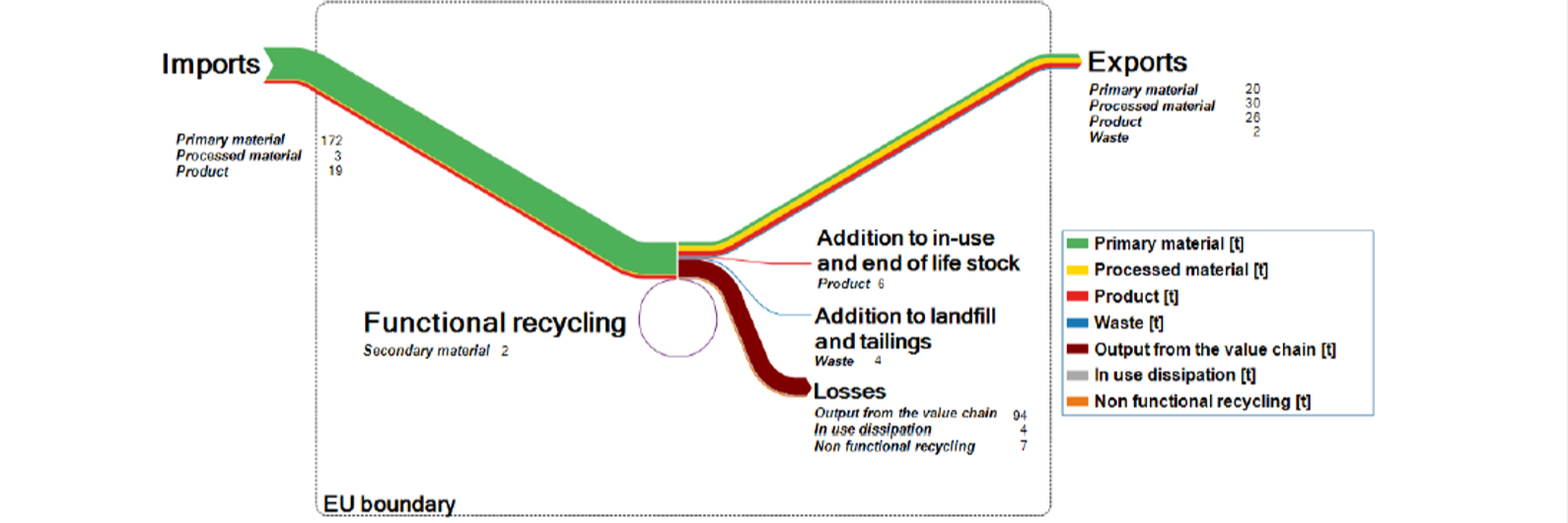
In Figure 12 from [MSA,2021], flows and stocks are accounted in mass of hafnium (t Hf) and are representative of the year 2016. The values presented here are not raw data but aggregated results. All numbers are rounded to 1 tonne. Hafnium reserves in the EU are estimated at 6 800 t Hf content. Global resources are estimated at 1 million t Hf content. In 2016, around 28 kt of hafnium contained in zirconium ores were extracted. It is important to note that only a minor fraction (< 1%) of the hafnium contained in zirconium ores extracted is recovered and enters the value chain for hafnium. The main fraction is considered as lost (as impurities in zircon and zirconium products). There is currently no production of zirconium ores in the EU. The EU imported 3 kt of hafnium contained in zirconium ores and concentrates in 2016, while exports of zirconium ores and concentrates amounted to 112 t of hafnium. However, these flows did not enter the value chain for hafnium. In the EU hafnium was exclusively produced from the semi-processed material zirconium dioxide of which 172 t of Hf content were imported and 20 t of Hf content were exported. From this input, 94 t of Hf contained in zirconium dioxide were used for the production of zirconium products only (they are considered to have left the hafnium value chain). Global production of hafnium in the form of hafnium metal, hafnium oxides and hafnium tetrachloride is estimated at 75 t in 2016. As the value for 2016 is atypical (probably due to an incident at the producing plant in France, the average value for 2012-2015 of 90 t at global level is also mentioned at this point. At the processing step, production in France amounted to 39 t Hf in 2016 and 58 t Hf based on the average value for 2012-2015, the latter was the one used for further calculations. 30 t of processed hafnium were exported, while 3 t of processed hafnium were imported. 31 t of processed hafnium were sent to manufacturing in the EU. About half was used for the manufacture of superalloys for aircraft jets and gas turbines. Other products include electrodes for plasma cutting, nuclear control rods, catalyst precursors (hafnium tetrachloride), semiconductors and sputtering targets for optical coatings (hafnium oxides). At the manufacturing stage, products containing 26 t of hafnium were exported, while products containing 19 t of hafnium were imported in 2016. Manufacturing waste from the production of superalloys was estimated at 1.7 t Hf. 24 t of hafnium in products were used in the EU. Based on the lifespan of the finished products, the stock of hafnium in manufactured products in use and at end of life is estimated to be 295 t Hf and 34 t Hf, respectively. It mainly consists of hafnium contained in superalloys in aircraft and gas turbines. Additions to in-use stock amount to 6 t Hf. In-use dissipation (of sputtering targets and plasma cutting tips) is estimated at 4 t Hf. 13.2 t of hafnium contained in products at end-of-life are collected for treatment in the EU. From those 4.4 t Hf are sent for disposal (nuclear fuel rods and as losses in recycling), 7.1 t Hf for non-functional recycling and 1.7 t Hf to functional recycling in the EU (superalloys).
In general, zirconium and hafnium are not separated because the process is expensive, except in the nuclear industry where hafnium is undesirable in fuel cladding alloys (because it absorbs neutrons). Production of zirconium requires the separation of the two metals, to allow the extraction of hafnium as by-product.Hafnium production then comes primarily from dehafnium zirconium from the nuclear industry. This implies a dependence of hafnium supply on the zirconium market, in particular the zirconium used in nuclear control rods. Then, supply of hafnium is heavily dependent on the nuclear industry and its demand for pure zirconium. Hafnium is also used in nuclear reactors because it is an excellent absorber of neutrons. Hafnium is put in the fuel rods themselves to absorb excess neutrons and prevent a chain reaction that would cause an explosion [Jones III J.V.,2017].
France and USA are the major hafnium producing countries with combined share of more than 85% globally in 2019. India and China present a low-volume domestic hafnium production but are not exporting [IndustryArc (Hf),2022]. France is the world major producer of hafnium, and the only one in the EU, with 35 tonnes of annual production in 2016. Cezus (the French nuclear group Areva) dominates hafnium market in Europe [MCgroup (Zr, Hf),2022]. In France, hafnium is produced from zirconium dioxide, a semi-processed material produced from zircon sand. Given the substantial domestic supply and the limited consumption, there is no import reliance of the EU [ALKANE,2019] [Eurostat,2019].
Western Zirconium, a subsidiary of the Chinese state-owned group CNNC, is a leading producer of nuclear-grade zirconium sponge and zirconium alloys for the nuclear industry. The company operates an integrated supply chain covering ore processing, the production of zirconium-based chemical compounds, and the manufacture of zirconium sponge and alloys. Since hafnium is intrinsically linked to zirconium in zircon minerals, hafnium-bearing streams are inevitably generated during the purification processes used to produce hafnium-free, nuclear-grade zirconium. Although China has significantly expanded its zirconium refining and nuclear material production capabilities over the past decade, the extent to which recovered hafnium is purified and marketed as metal or hafnium compounds is poorly documented in public sources.
The presence of hafnium in the earth’s crust is somewhat rare, with 5.3 ppm upper crustal abundance [Rudnick, R.L. and Gao, S.,2003]. The occurrence of hafnium is attended by zirconium, which is about 25 times more abundant in Earth’s crust (132 ppm). Commonly these two elements are combined in solid solution with each other. The two major sources of zirconium and hafnium are zircon (ZrSiO4) and baddeleyite (ZrO2), in which hafnium is normally present 1.5-3.0 wt%. Hafnium occurs in most types of magmatic and sedimentary rocks as well as in sediments, but usually in very low concentrations. Hafnium is not present in nature in its elemental form. The only mineral known with hafnium as major constituent is hafnon ((Hf,Zr)SiO4). Hafnon occurs in tantalum-bearing granite pegmatites in the Zambézia district of Mozambique, and hafnian zircon has been identified in a niobium-tantalum-rich granitic complex in China [Wang R.C. et al. ,1996].
The world’s largest primary deposits of zirconium and hafnium are associated with alkaline igneous rocks, and, in one locality on the Kola Peninsula of Murmanskaya Oblast, Russia, baddeleyite is recovered as a byproduct of apatite and magnetite mining. Another rare hafnium-bearing mineral is eudialyte (Na15Ca6Fe3Zr3 Si26O73(OH)4Cl2) which is locally abundant in alkaline and peralkaline magmatic rocks such as nephelinites and syenites [Jones III J.V.,2017]. Eudialyte-bearing rocks have been identified in alkalic intrusive complexes worldwide [Marks M.A.W. et al.,2011] [Sjöqvist, A.S.L. et al. ,2013] e.g. the Lovozero Massif in the Kola Peninsula, Russia, hosts nearly monomineralic eudialyte ores that contain 10 % ZrO2 [Kogarko L.N.,1990] [Mikhailova, J.A., et al.,2020] . Another known eudialyte -rich ore is Norra Kärr in southern Sweden [Sjöqvist, A.S.L. et al. ,2013] [Gates P.E. et al,2013].
Otherwise, there are few primary igneous deposits of zirconium- and hafnium-bearing minerals with economic value at present. The main economic ore deposits worldwide are heavy-mineral sands (the so-called placers) produced by the weathering and erosion of preexisting rocks and the concentration of zircon and other economically important heavy minerals [Jones III J.V.,2017]. As a result, all hafnium produced comes from zirconium ores. Therefore, hafnium production depends exclusively on zirconium extraction and refining and total Hf output is assumed to be small. During the processing of these ores, hafnium is processed as by-product (Zr-Hf ratio is about 50:1). Globally, there exist today three predominant ore types that are relevant zirconium and hafnium sources: heavy mineral sands (HMS), carbonatites and to a minor degree peralkaline intrusions.
Global resources and reserves: The world’s largest primary deposits of hafnium are associated with alkaline igneous rocks e.g. the Kovdor deposit (baddeleyite) and the Lovozero complex (eudyalite) in the Kola Peninsula, Russia [Kogarko L.N.,1990]. The most economic hafnium deposits are placers, sedimentary formations with heavy-mineral enrichment as a result of weathering and transport processes.
| Country | Resources (tonnes) |
|---|---|
World resources of hafnium are associated with those of zircon and baddeleyite. Hafnium is exclusively produced as a by-product of zirconium metal. Production of Hf-free zirconium is the main source for Hf. Thus, quantitative values of hafnium resources are not available [JRC,2024][USGS, 2025]. However, global resources of hafnium can be estimated at 1 million t Hf content. In 2016, around 28 kt of hafnium contained in zirconium ores were extracted. It is important to note that only a minor fraction (< 1%) of the hafnium contained in zirconium ores extracted is recovered and enters the value chain for hafnium. The main fraction is considered as lost (as impurities in zircon and zirconium products) [MSA,2021] .
There is a number of heavy mineral sands projects in development that could produce zircon containing hafnium. Strandlines Resources is developing the Fungoni project in Tanzania and the Coburn project in Western Australia. Base Resources is planning to increase its production levels by expanding exploitation at Kwale mine and developing the Torliara project in Madagascar. Savannah Resources and consortium partner Rio Tinto are continuing to advance the Mutamba project in Mozambique. Finally, Alkane Resources’ Dubbo Project could potentially process a fine-grained micro-porphyritic trachyte that contains an unusual hydrous zirconium silicate, which could provide a source of zirconium [EdisonGroup,2019].
| Country | Zirconium Reserves (tonnes) |
|---|---|
| Australia | 51 000 000 |
| South Africa | 14 000 000 |
| India | 3 400 000 |
| Mozambique | 1 100 000 |
| China | 500 000 |
| United States | 500 000 |
| Other countries | 7 200 000 |
Data on hafnium supply, demand and reserves are not recorded; the figures available are generally estimates [European Commission ,2014]. Deposits of heavy metals sands, which are commercially recoverable, are found in China, Malaysia, Thailand, India, Sri Lanka, Australia, South Africa, Madagascar, and the United States. For example, in Virginia (USA), hafnium and zirconium were mined primarily from the deposits of heavy mineral sands in Hanover, Dinwiddie and Greensville counties. Several historic prospects for zirconium and possibly hafnium have been reported near the town of Ashland in the Hanover County. Although local sandstone contains approximately 33 % zircon by weight, the area was not industrially mined. Heavy mineral sands were mined in Dinwiddie and Greensville counties. (https://energy.virginia.gov/geology/Hafnium.shtml).
World reserves for hafnium are, with some exceptions, not recorded, but can be estimated from those of zirconium. Table 1 shows the estimated world reserves of zircon [Bedinger G.M. ,2016]. USGS estimates world resources of hafnium associated with those of zircon and baddeleyite as exceeding 1,000,000 tonnes. In Greenland, hafnium resources (mainly Skaergaard intrusion) estimate is 1,100,000 t [Eilu P.,2021 a].
| Country | Classification | Quantity (Mt of ore) | Grade (% Hafnium) | Reporting code | Reporting date | Deposit, Source | ||
|---|---|---|---|---|---|---|---|---|
| Country | Classification | Quantity (Mt of ore) | Grade (% Hafnium ) | Reporting code | Reporting date | Source | ||
|---|---|---|---|---|---|---|---|---|
| Sweden | Probable | 23.571 | 0.0286 | CIM Guidelines |
Hafnium reserves in the EU are estimated at 6800 t Hf content. Hafnium is is produced in France as a by-product of zirconium metal manufacture EU [MSA,2021]. Known resources in Northern Europe are Sweden 6,781 t and potential resource in Finland at Sokli. In Norway and Sweden, all zirconium-rich mineral resources present a potential resource for hafnium [Eilu P.,2021 a].
The single hafnium reserve in the EU reported is Norra Kärr in Gränna, Sweden. Norra Kärr is a rare earths deposit, which contains beside REEs also zirconium, hafnium, uranium and thorium. The main hafnium-hosting mineral is eudialyte (Na15Ca6 Fe3 Zr3 Si26O73(OH)4 Cl2) [GBM0465,2015]. The Norra Kärr deposit, along with REE and zirconium, is enriched in hafnium with a reserve grade of 338 ppm hafnium oxide (HfO2) [Budge K. ,2018]
At the Minerals4EU website, no data is available on resources and reserves for hafnium in Europe [Minerals4EU,2019A].
World primary hafnium production data are not available, mainly because of the close association with the nuclear industry. Quantitative estimates of hafnium reserves are not available and the time of the report preparation. Hafnium is extracted as by-product from zirconium recovery routes. The world annual hafnium production from zirconium ores was about 71 tonnes in 2016. Due to lack of repeated production data, this value has been used as average for the period 2012-2016 in the calculation for the criticality assessment.
Heavy mineral sands mining projects are in progress in China, Australia, and Siberia. The U.S. maintains a supply of hafnium in the National Defense Stockpile, and is a net exporter. In the United States, hafnium is mined in Florida and Georgia. In Virginia, hafnium and zirconium are primarily from the mineral zircon sourced from deposits of heavy mineral sands in Hanover, Dinwiddie and Greensville counties [Energy Virginia, ]. In the US, in 2021, hafnium metal was produced from zirconium chemical intermediates by one producer in Oregon and one in Utah [USGS,2022].
13.2 t of hafnium contained in products at end-of-life are collected for treatment in the EU. From those 4.4 t Hf are sent for disposal (nuclear fuel rods and as losses in recycling), 7.1 t Hf for non-functional recycling and 1.7 t Hf to functional recycling in the EU (superalloys). Based on the scarce data that is available we assume that the EOL-RIR is in the range of 0-1%. UNEP and USGS assume a recycling rate of <1%. Compared to other materials, data gaps are large and reliability of results is limited by data availability especially for the downstream flows. So far, no data are available on trade flows at the collection and recycling stages nor on manufacturing waste generated during production nor on secondary production. We assumed that the global shares are representative for the use of manufactured products in the EU, and that the product groups do well represent the products containing hafnium. Based on the expert opinion that superalloys are recycled to produce new superalloys, we assumed that roughly 20 % of Hf in EOL-superalloys are sent to recycling [MSA,2021].
| MSA Flow | Value | ||
|---|---|---|---|
According to the results of the Material System Analysis on Hafnium, based on 2016 dataset, the EoLRIR (End-of-Life Recycling Input Rate) is calculated to 0% [MSA,2021] [RMIS,2025]. Currently, there is little information available on hafnium recycling. Recycling of superalloys containing hafnium would translate into hafnium recycling, however, experts assessed at the validation workshop that there is no information available on such recycling. It is likely that currently little to no post-use EOL recycling of hafnium is being carried out, given its contamination in the nuclear industry and the low percentage content in superalloys. UNEP reports that the end-of-life recycling rate is lower than 1% [UNEP,2011]. There are no indications that this has changed since then. Hafnium metal recycling is considered insignificant in the United States [Bedinger G.M. ,2016].
Given the existence of hafnium as a by-product of titanium and zirconium, it is likely that hafnium waste from production processes is reintroduced in the process.
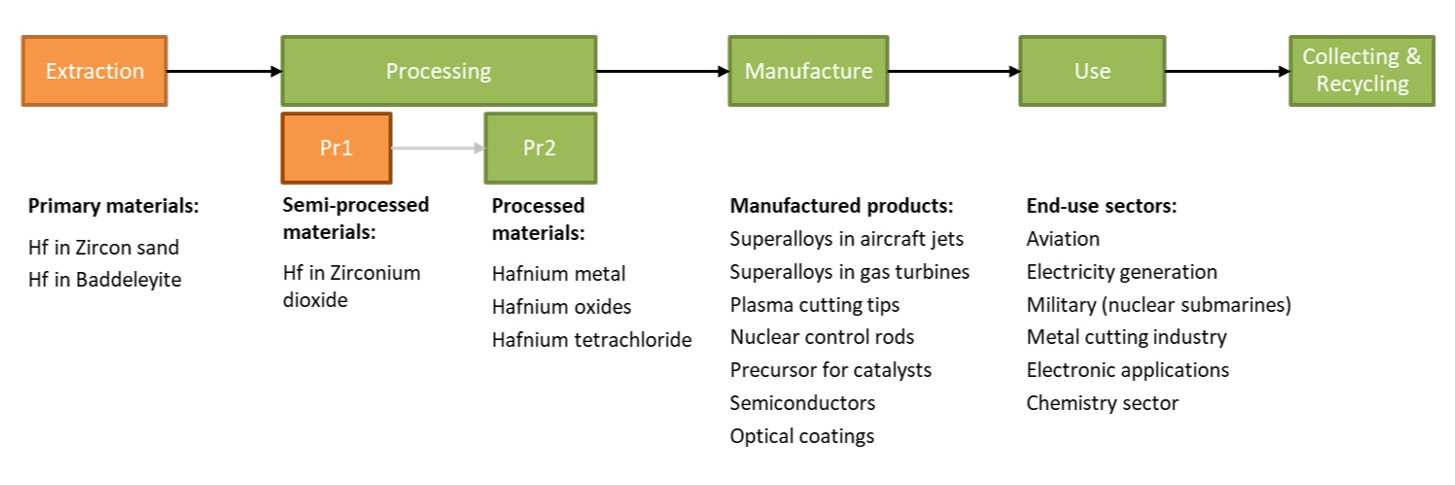
Hafnium is extracted from hafnium bearing zirconium ores using predominantly Kroll process which is based on chlorination of zircon under high temperature to produce a mixed zirconium/hafnium tetrachloride. After crushing, milling and roasting the ore, the material is leached and undergoes a solvent extraction. From this solution, zirconium and hafnium are extracted, and potentially niobium is recovered. After precipitation, the resulting oxide is chlorinated in the presence of coke at high temperature to hafnium tetrachloride and reduced to sponge by magnesium. Hafnium sponge is vacuum-melted into ingots and hafnium metal can be further refined by electron beam melting zonerefining, molten salt electrorefining and Hydrogen plasma arc melting [Rosenberg H. et al. ,2016] [ALKANE,2019]. The separation of the pair zirconium and hafnium is difficult due to the similarity of their chemical properties such as atomic radius, ionic radius and electronegativity. Several methods have been applied to separate this ionic pair. Such methods include fractional crystallization, ion exchange, fractional distillation, thermal diffusion, solvent extraction and electrochemical separation [Felipe E.C.B. ,2013]. In France, hafnium is produced from zirconium dioxide, a semi-processed material produced from zircon sand. A mixture of zirconium dioxide and carbon black is made to react with chlorine at high temperature, producing hafnium-containing zirconium tetrachloride. After purification, hafnium tetrachloride is separated from zirconium tetrachloride using distillation. Hafnium tetrachloride is then reduced to the pure metal by the Kroll process which is refined to hafnium oxide and hafnium ingots by calcination and electro refining [MSA,2021].
Although the Kroll process remains the dominant industrial route owing to its maturity and scalability, alternative metallurgical processes have also been developed. In particular, molten-salt electrolysis has been investigated as a direct route for the production of metallic hafnium from hafnium-containing chlorides or fluorides, offering the potential for lower energy consumption and simplified processing. For applications requiring ultra-high-purity hafnium, such as research or specialized nuclear applications, additional purification can be achieved using the Van Arkel–de Boer iodide process, in which volatile hafnium iodides are thermally decomposed on a heated filament to deposit exceptionally pure hafnium metal.
Because hafnium is generally processed into semi-finished products that are already close to their final dimensions, relatively little machining is required during component fabrication. Consequently, most manufacturing scrap is generated during the production of semi-finished products and is typically recycled internally within the production process, resulting in high recycling efficiencies for fabrication scrap.
Other considerations
Elemental hafnium is a flammable solid and catches fire spontaneously if exposed to air [ECHA (Hf),2022]. The US Occupational Safety and Health Aministration [US OSHA (Hf),2023] subpart Z “Limits for Air Contaminants” sets a limit of 0.5 mg/m3 of air as an 8-hour concentration for hafnium.
The Environmental Protection Agency (EPA) promulgated the Nonferrous Metals Manufacturing (NFMM) Effluent Guidelines and Standards (40 CFR Part 421) initially in 1974-1976, and added subcategories and revised the regulations in 1980-1990 pursuant to Clean Water Act amendments and litigation. The regulations cover wastewater discharges from a wide range of metal manufacturing facilities. The NFMM Effluent Guidelines and Standards are incorporated into NPDES permits for direct dischargers and permits or other control mechanisms for indirect dischargers (see Pre-treatment Program). Among the 31 facilities listed under the Guidelines, Subpart AE refers to primary zirconium and hafnium. [US EPA (Zr, Hf),1985].
| Country | Export value (USD) | Share in total exports |
|---|---|---|
Horgan et al. [Horgan M.D., et al,2023] apply the Emerging Materials Risk Analysis (EMRA) to thin films of hafnia (HfO2) with the goal of determining the most sustainable route for its mining, processing, use and disposal. The study takes into consideration impacts across environmental, health, and societal parameters, which are all assessed through a literature review. The findings show that societal impacts are related to land-ownership conflicts and supply chain-related disputes. Specifically, the extraction of hafnium is linked to “disputes over site use due to competing political, religious or heritage claim”, while the beneficiation and processing phases are linked to “material supply concerns (low recyclability, materials’ export requirements)”. No references are reported on societal impacts during the use phase of hafnia thin films, while its disposal is related to “unregulated electronic waste recycling processes [which] could impact health of those working at or near the site”.